Designing with AI and Empathy at Enterprise Scale: Grupo Bimbo
At Antuit.ai as a Senior Managing Consultant, I led end-to-end UX on Grupo Bimbo's global ordering platform, a legacy tool that frontline teams distrusted and underused. Over 13 months, the redesign became an AI-assisted companion now used daily by 20,000+ operators, managers, and drivers, driving a 30% improvement in product freshness and seven-figure revenue impact.
Keywords: B2B · Figma · AI/ML · Product Design · A/B Testing · IOS UI Design · Branding · Communication · Presentations · UX Wireframes · AI Tools
Client
Type
Year

Approach
Grupo Bimbo, the world's largest baking company, runs Direct Store Delivery routes through tens of thousands of frontline workers. As Senior UX Designer consulting via Antuit.ai, I owned end-to-end UX from concept to production, partnering with 8 engineers in Bangalore, 3 PMs, and Grupo Bimbo's C-suite. Constraints: no design system, no roadmap budget for components, a globally distributed team, and frontline users skeptical of "another corporate tool."
The Problem
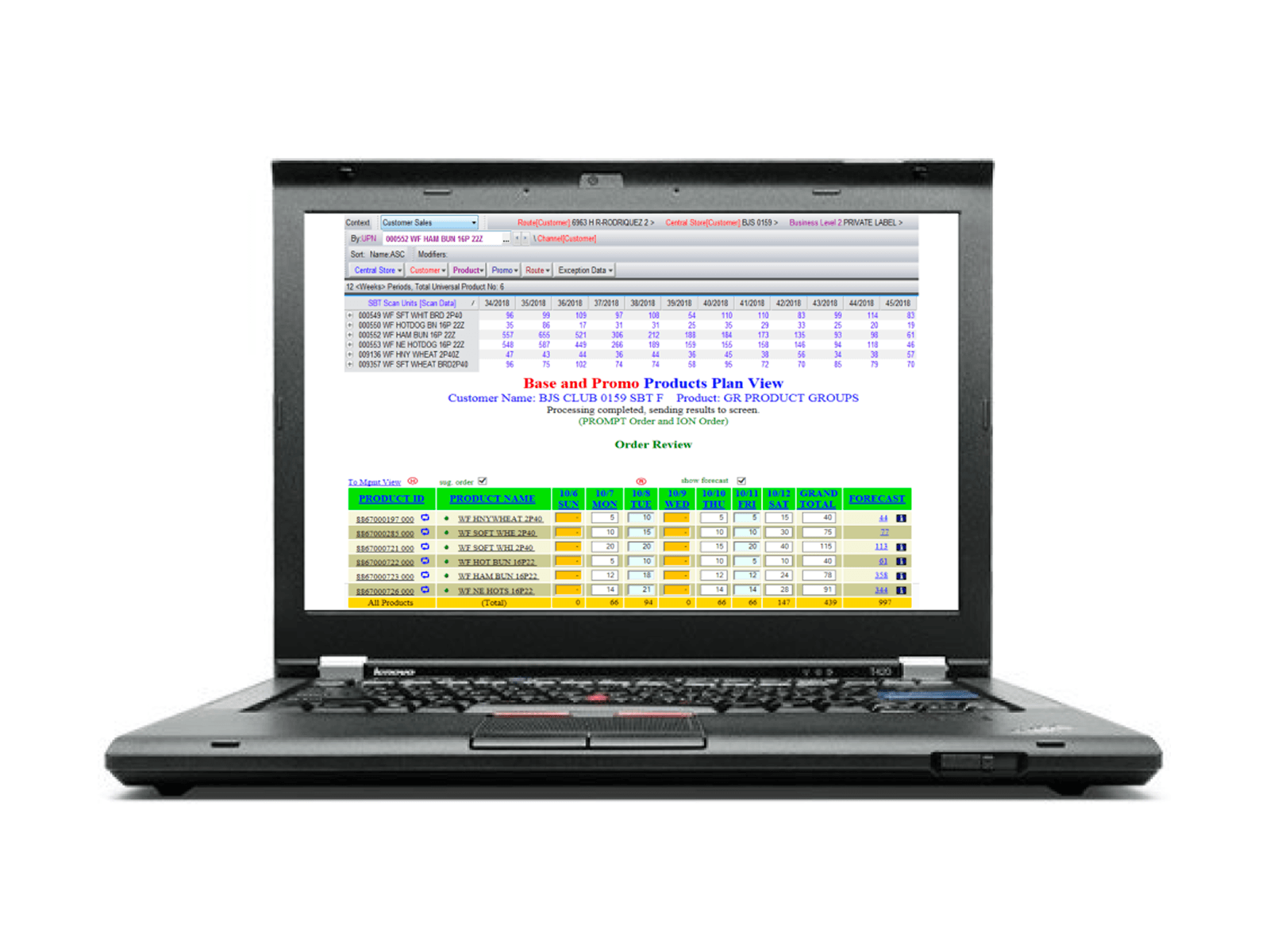
The legacy system buried users in data with no hierarchy, broken flows, and inconsistent CTAs. Adoption was low because frontline teams read it as surveillance, not support. Those gaps translated directly into missed freshness scores and lost revenue. "Too much data, not enough time," one driver told me. The real challenge wasn't the interface; it was reframing AI from commander to coach.
“Too much data, not enough time.”
Frontline worker
Approach
I structured my work around three pillars that map directly to a Design Ops ROI framework: understand the user, streamline the experience, scale the system.
1. Field Research
To design for the frontline, I had to get into the field. Over twelve months, I visited 12 distribution centers across 9 states, joining ride-alongs and observing how workers and managers actually interacted with the tool. I conducted user testing with more than 45 frontline users, the most extensive field research of my career.
2. Personas & Archetypes
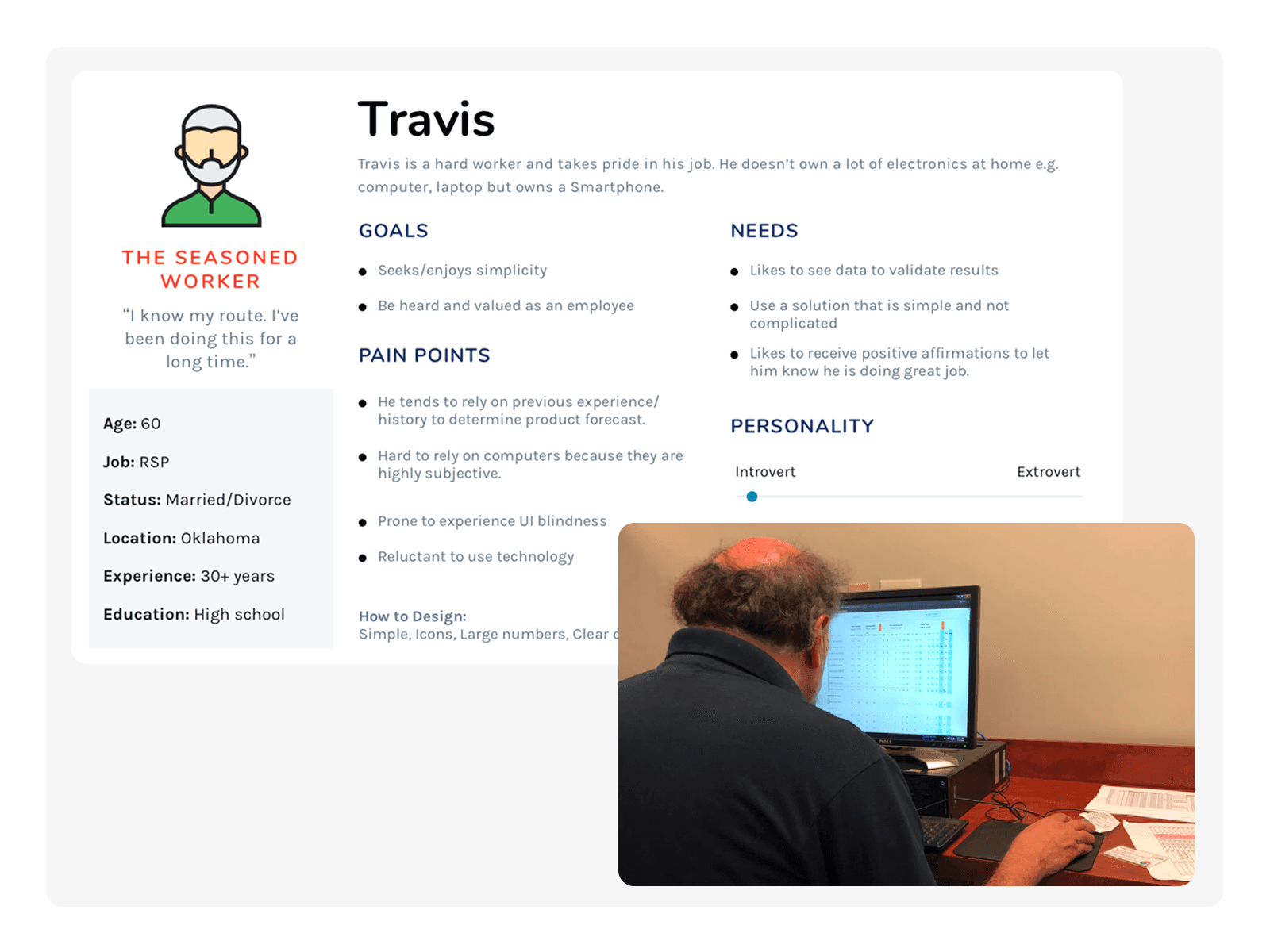
Those conversations gave me a deep understanding of routines, challenges, and mindsets. I developed two personas that aligned user goals with business outcomes and AI capabilities, then created an archetype document that humanized those personas and paired their stories with quantitative data from Grupo Bimbo's analytics team.
Through research, I confirmed what frontline users actually needed: a simple, focused UI that reduced clutter. The ability to scan content quickly and find key details at a glance. Clear, consistent CTAs. And AI that behaved predictably and communicated its reasoning.
3. Funnel-Style UX
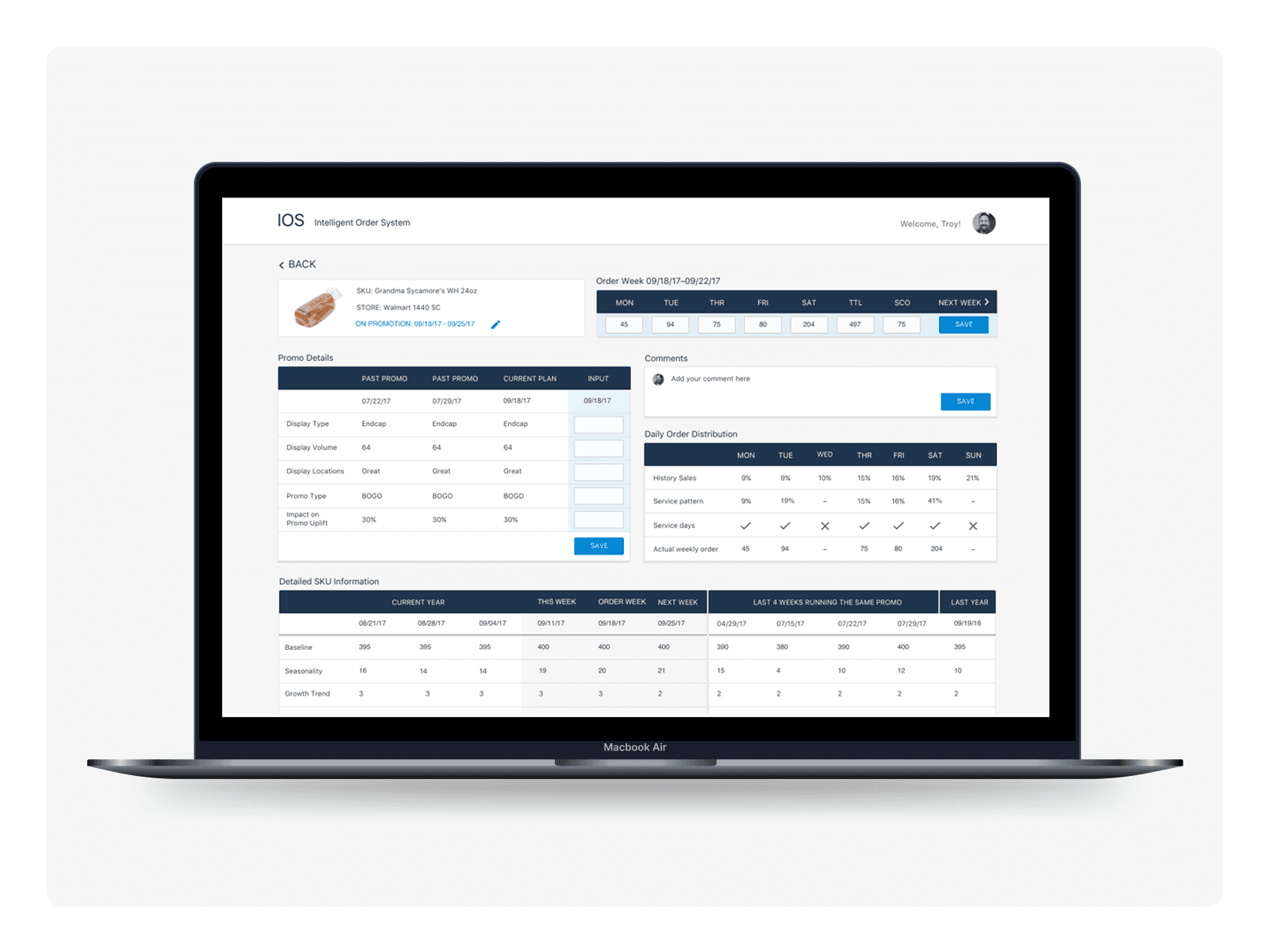
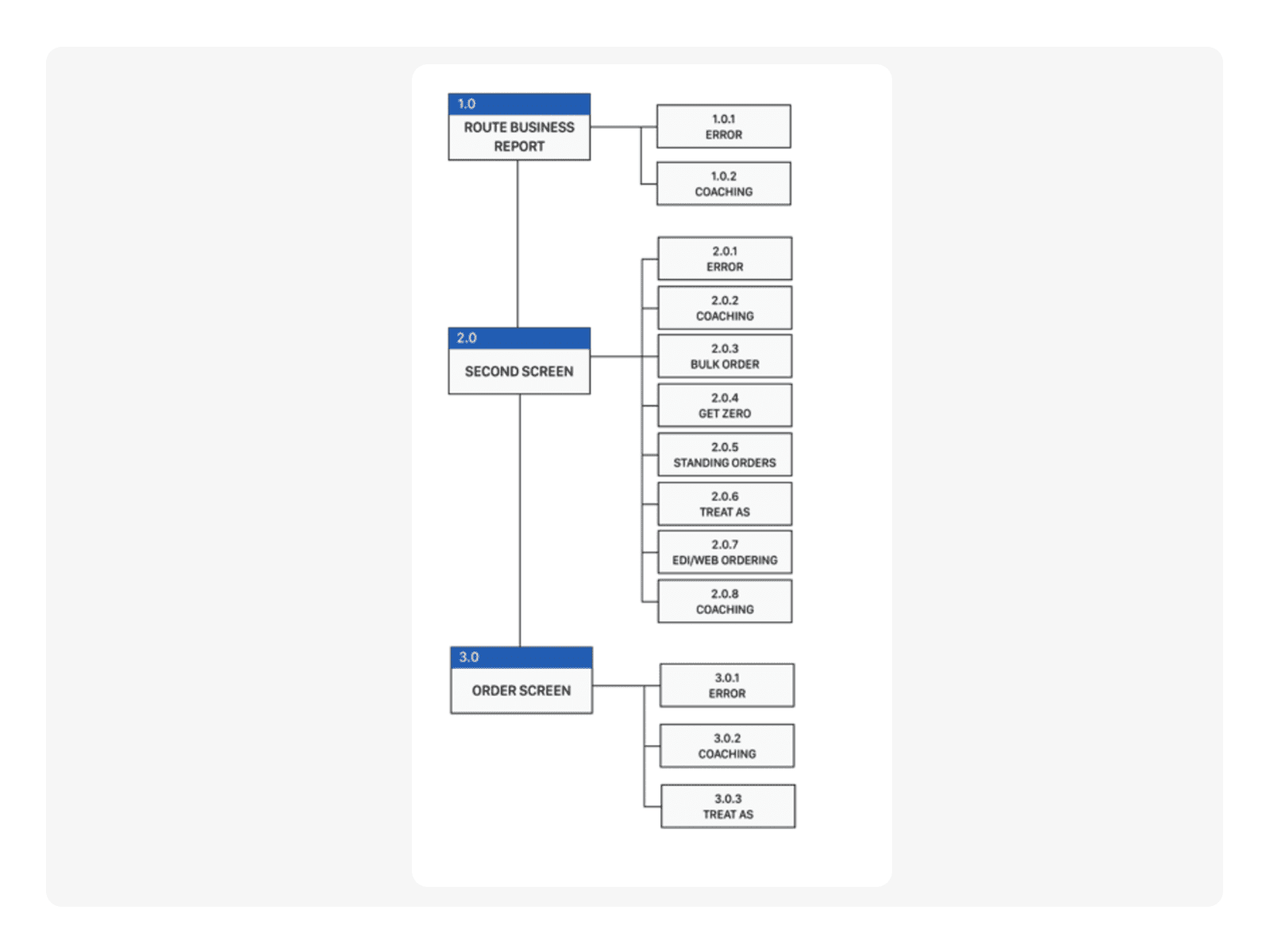
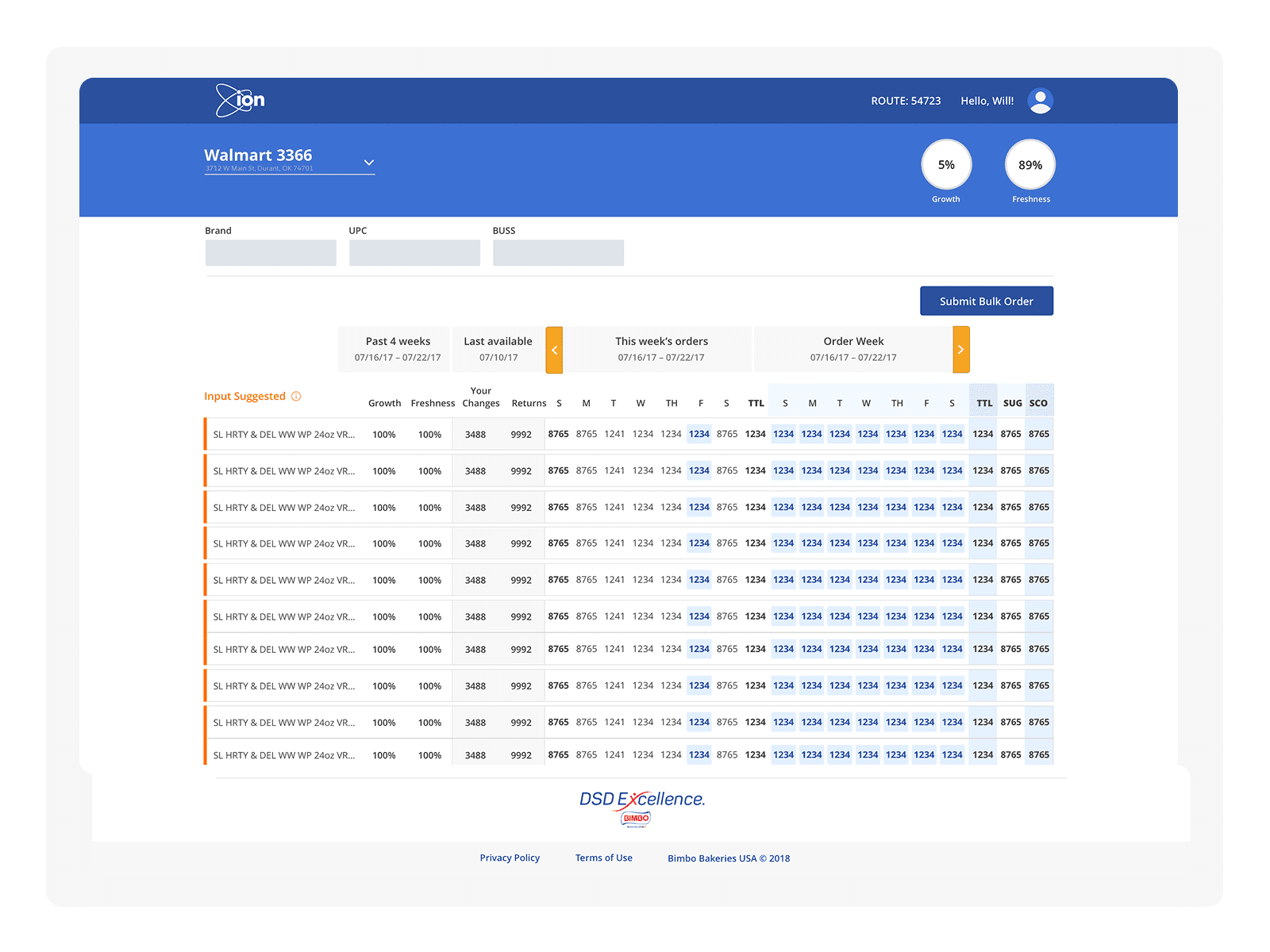
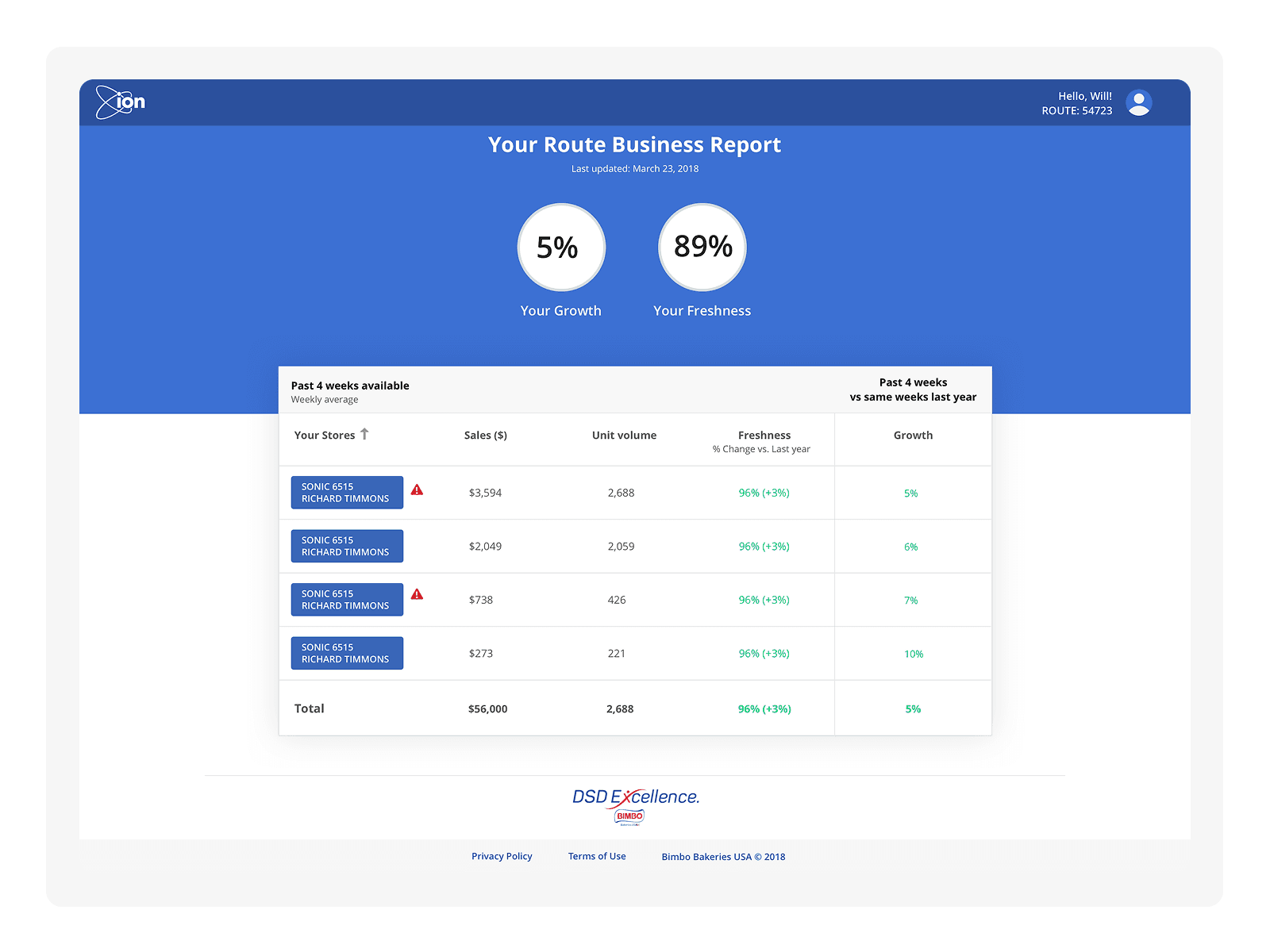
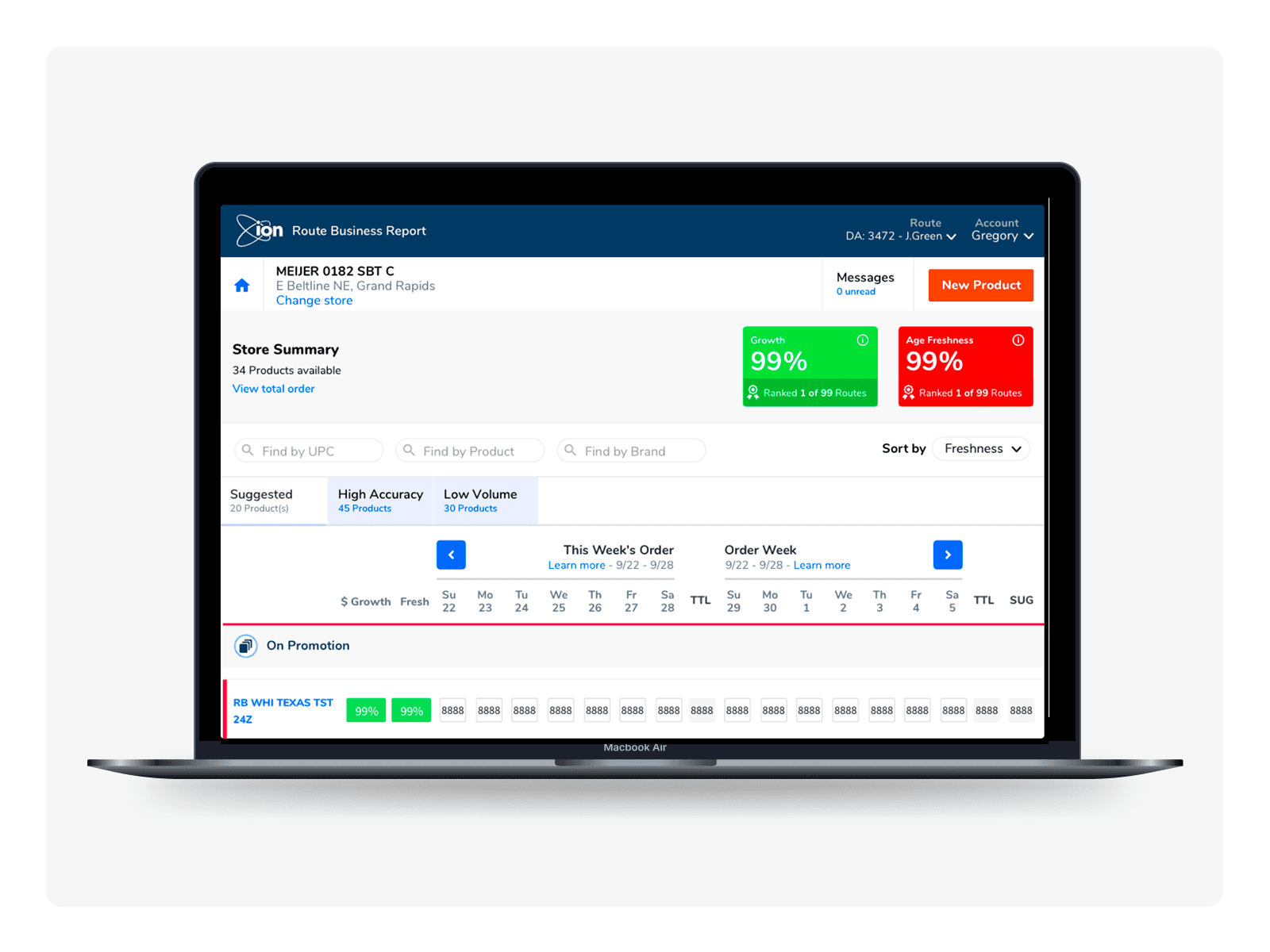
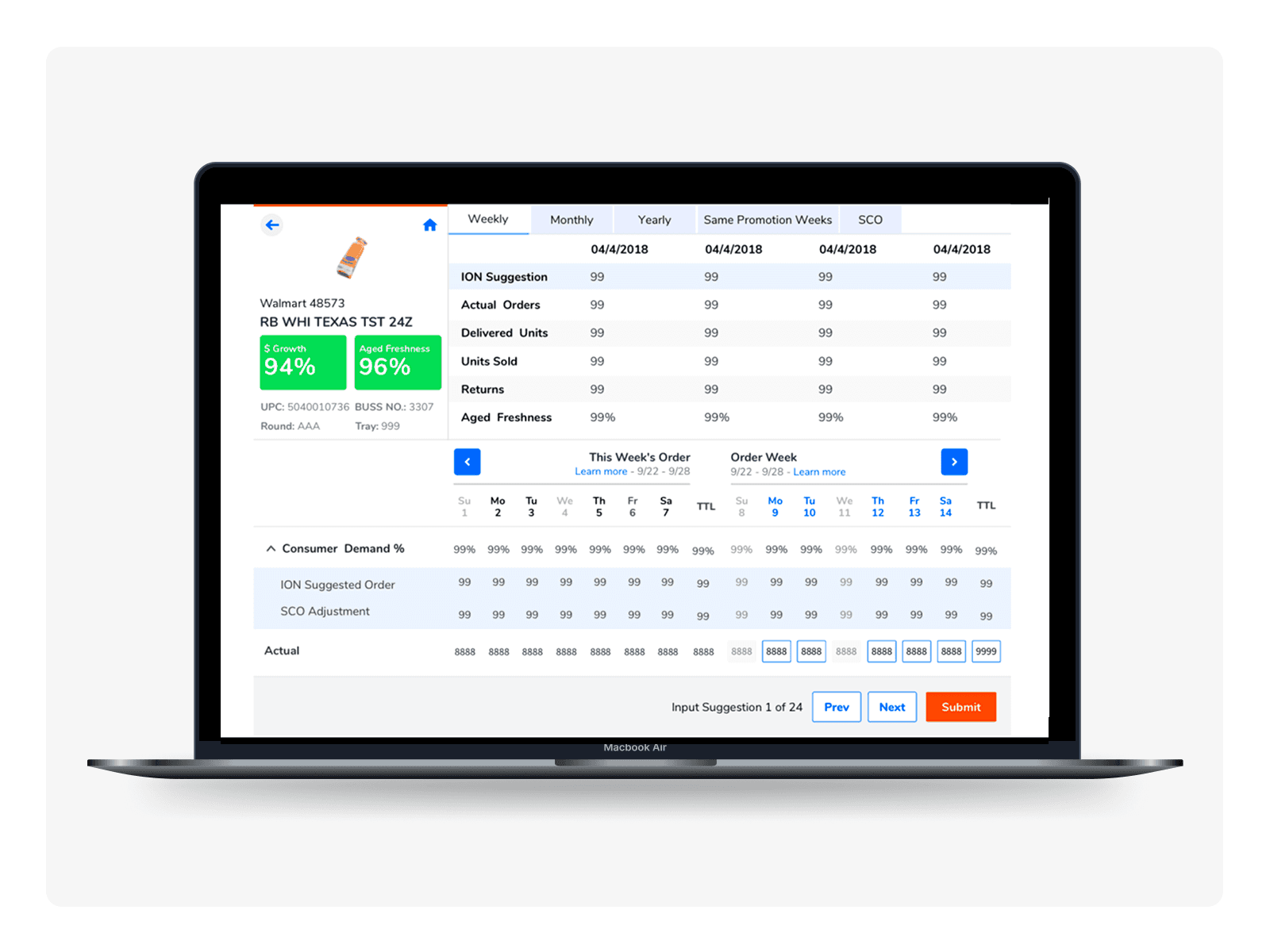
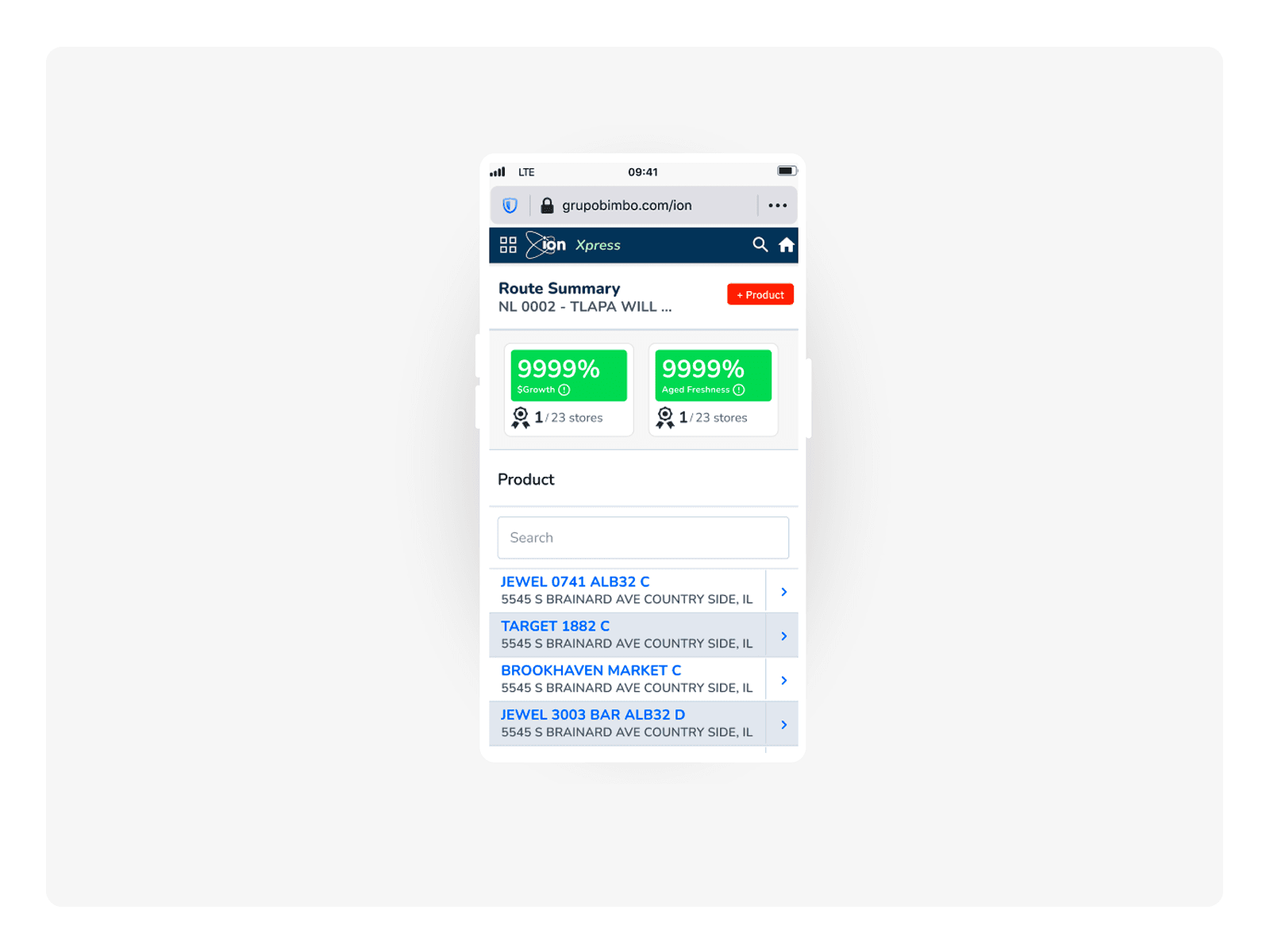
I restructured the experience from sprawling, multi-task pages into a guided, funnel-style flow that mirrored the natural rhythm of a delivery route. Instead of dumping everything on one screen, I designed a progressive drill-down: start with a broad view of stores, then move into detailed product information as needed.
Decoupling user tasks was the first structural move. The original flow consolidated multiple tasks onto a single page, overwhelming users. The new modular architecture not only improved the experience but gave the business flexibility for introducing new features without disrupting existing workflows.
4. AI Integration
AI became a coach, not a commander. The modular design supported AI-assisted recommendations without overwhelming users. AI highlighted freshness risks, suggested reorder amounts, and dynamically prioritized tasks, but never dictated the result. I introduced clarity through clean visual hierarchy, bold CTAs, and language that matched how frontline teams actually spoke. We repositioned ION as a partner in frontline success, showing in tangible ways how the tool protected earnings, reduced waste, and improved freshness scores.
5. Design System
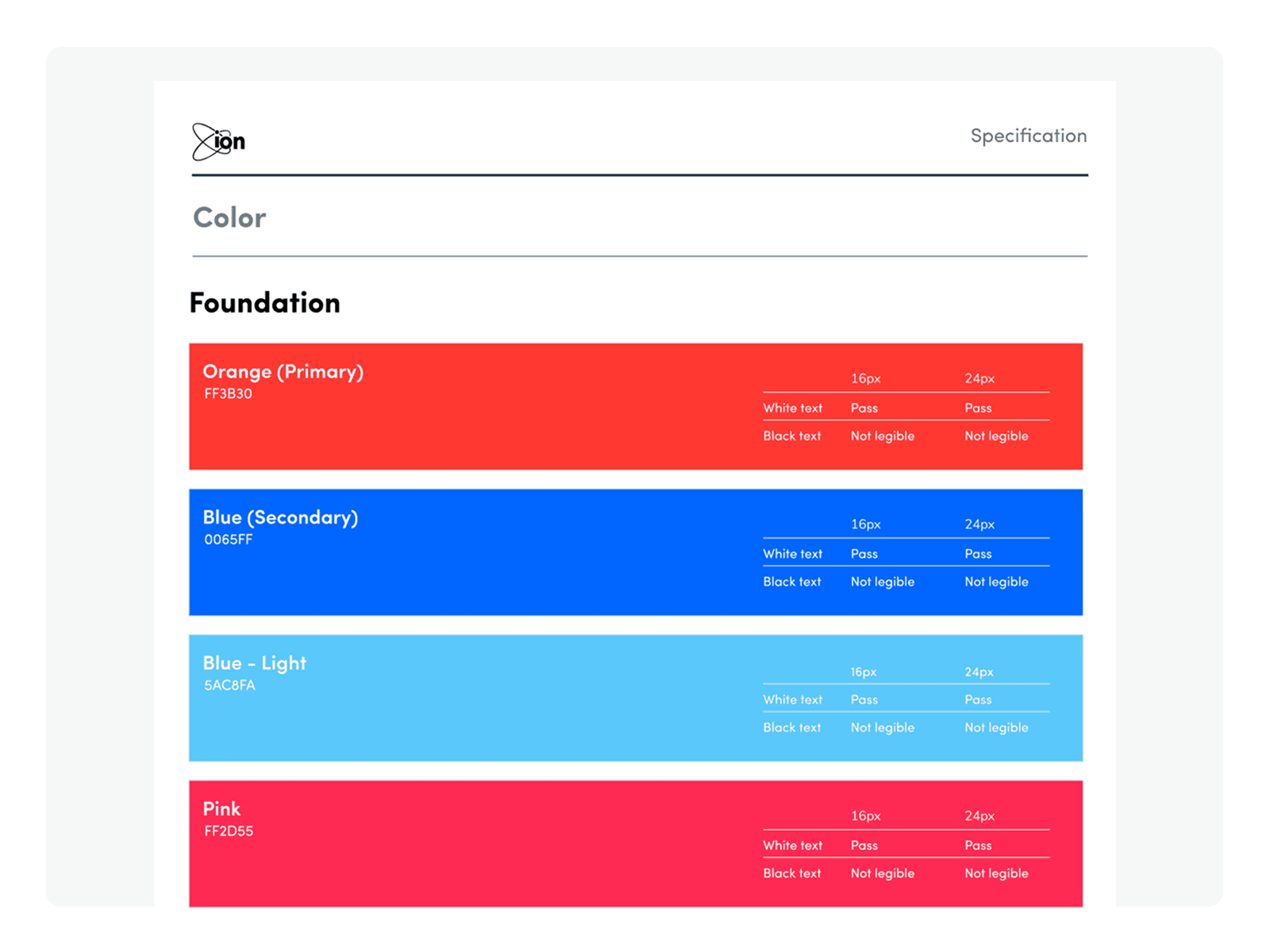
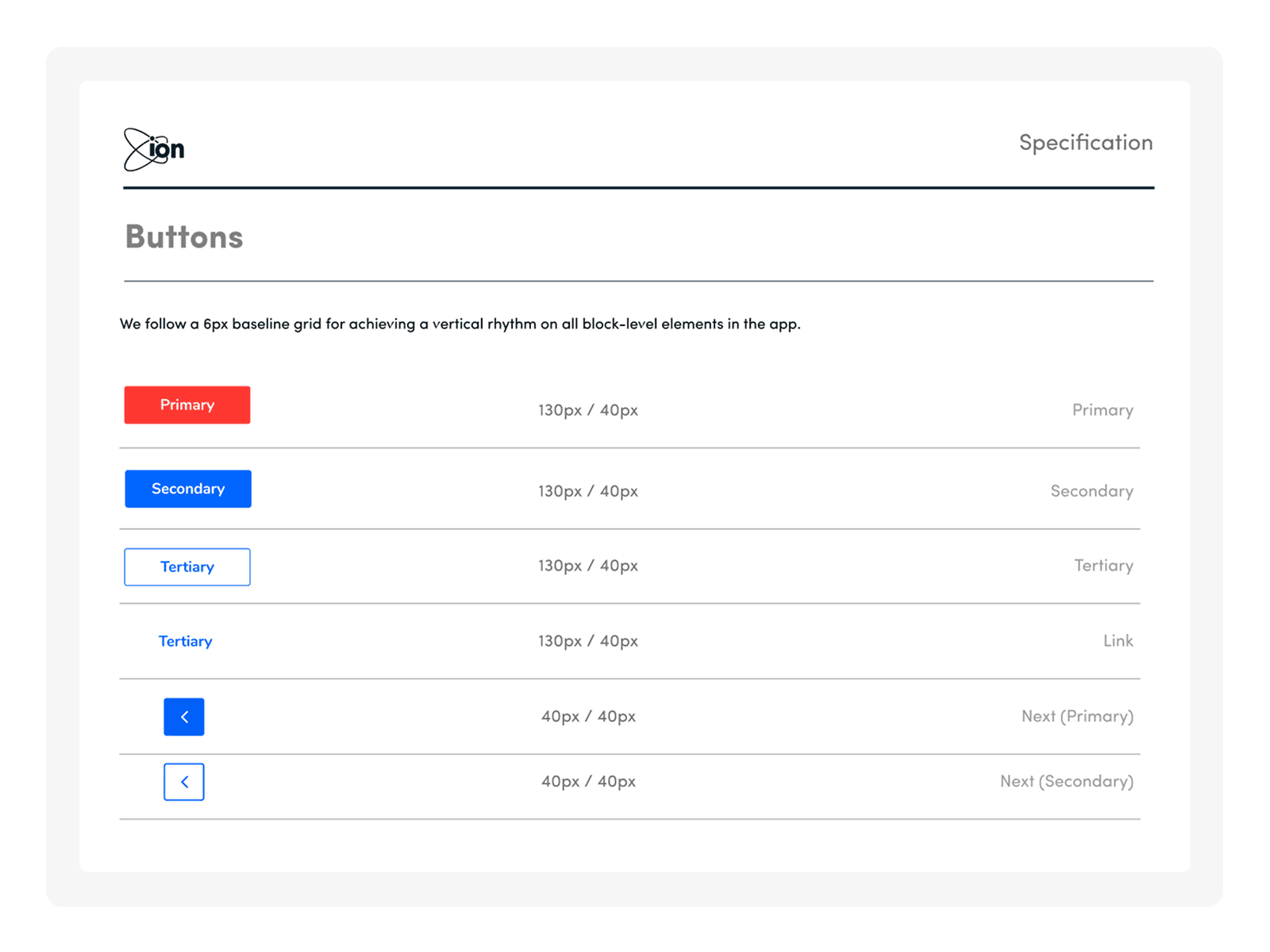
With no existing design system and no roadmap allocation for component creation, I partnered directly with engineers in an agile process to design and develop reusable components. Each component was built mobile-first to ensure scalability across all screen sizes.
I conducted extensive style exploration, involving designers and engineers to gather consensus, then documented the outcomes and transformed them into a reusable component library. This wasn't a side project, it was the infrastructure that made everything else sustainable.
The system reinforced visual hierarchy and built trust in AI recommendations, helping users quickly identify and resolve high-priority issues while giving the platform room to grow across future technologies and diverse frontline roles.
Impact
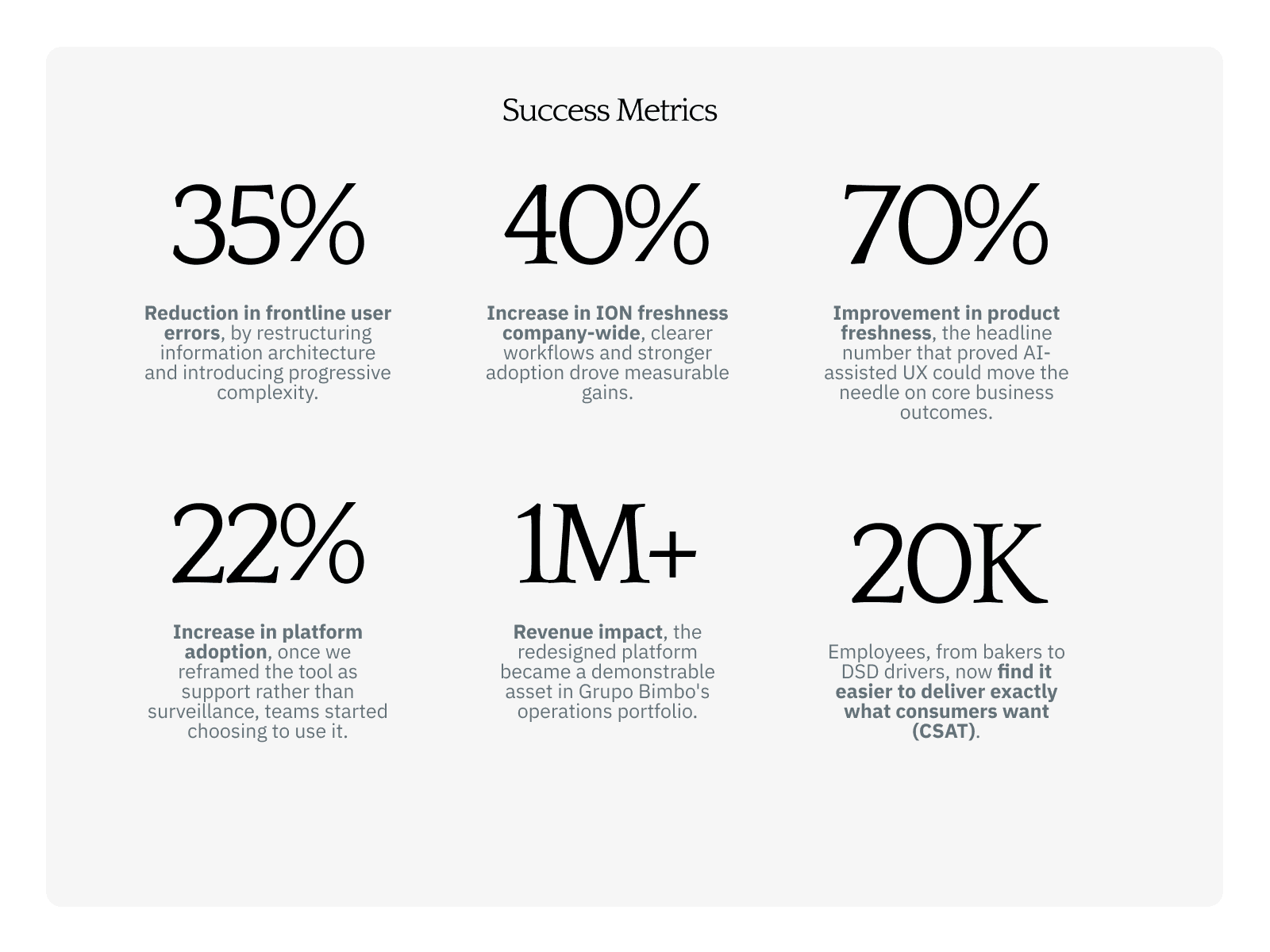
30% improvement in product freshness
21.6% increase in platform adoption
28% increase in task completion
42% increase in user satisfaction
35% reduction in frontline errors
Seven-figure revenue impact
20,000+ employees use it daily
Solution
A funnel-based experience replaced cluttered, multi-task screens, starting with a broad inventory view and progressively revealing product details only when necessary. AI highlighted freshness risks and suggested reorders without removing user control. By separating tasks that were previously crammed into a single interface, the system created space for new features without disrupting existing workflows.
Reflection
AI Should Coach, Not Command
The most meaningful design decision was making AI a suggestion layer, not an override. Highlighting risks, nudging freshness scores, and guiding reorders built trust.
Design Systems Unlock Scale
Building a component library from zero, in active delivery, reinforced that structure is speed. The system enabled rapid iteration across diverse frontline roles and new feature launches.
Empathy + Evidence = Credibility
Pairing qualitative archetypes with quantitative analytics gave me the leverage to prioritize features and negotiate trade-offs with leadership.
More than 20,000 employees, from bakers to DSD drivers, now find it easier to deliver exactly what baked‑goods consumers want.
Morgan Smith, VP of the Direct Store Delivery (DSD) Center of Excellence