Retail Intelligence: Building Smarter Decision Systems for Michael Kors
Zebra’s Lifecycle Pricing module helps retailers optimize markdowns across a product’s shelf life, but its legacy UX overwhelmed merchants with complex charts and slow decision-making. As Principal Product Designer, I led a five-month redesign that repositioned AI from a passive analytics layer to an active decision partner. The new experience reduced decision time by 60%, directly supported the close of two enterprise deals, and contributed to seven-figure revenue impact.
Client
Type
Year
Approach
Zebra's Workcloud platform supports retail merchants making high-stakes pricing decisions. I led UX as Principal Product Designer over 5 months, in a triad with the PM and Engineering Lead, with 6 engineers in Bangalore and direct client leadership. Constraints were severe: a 50% engineering cut mid-project, no change to scope or deadlines, and a live sales cycle riding on what we shipped.
The Problem
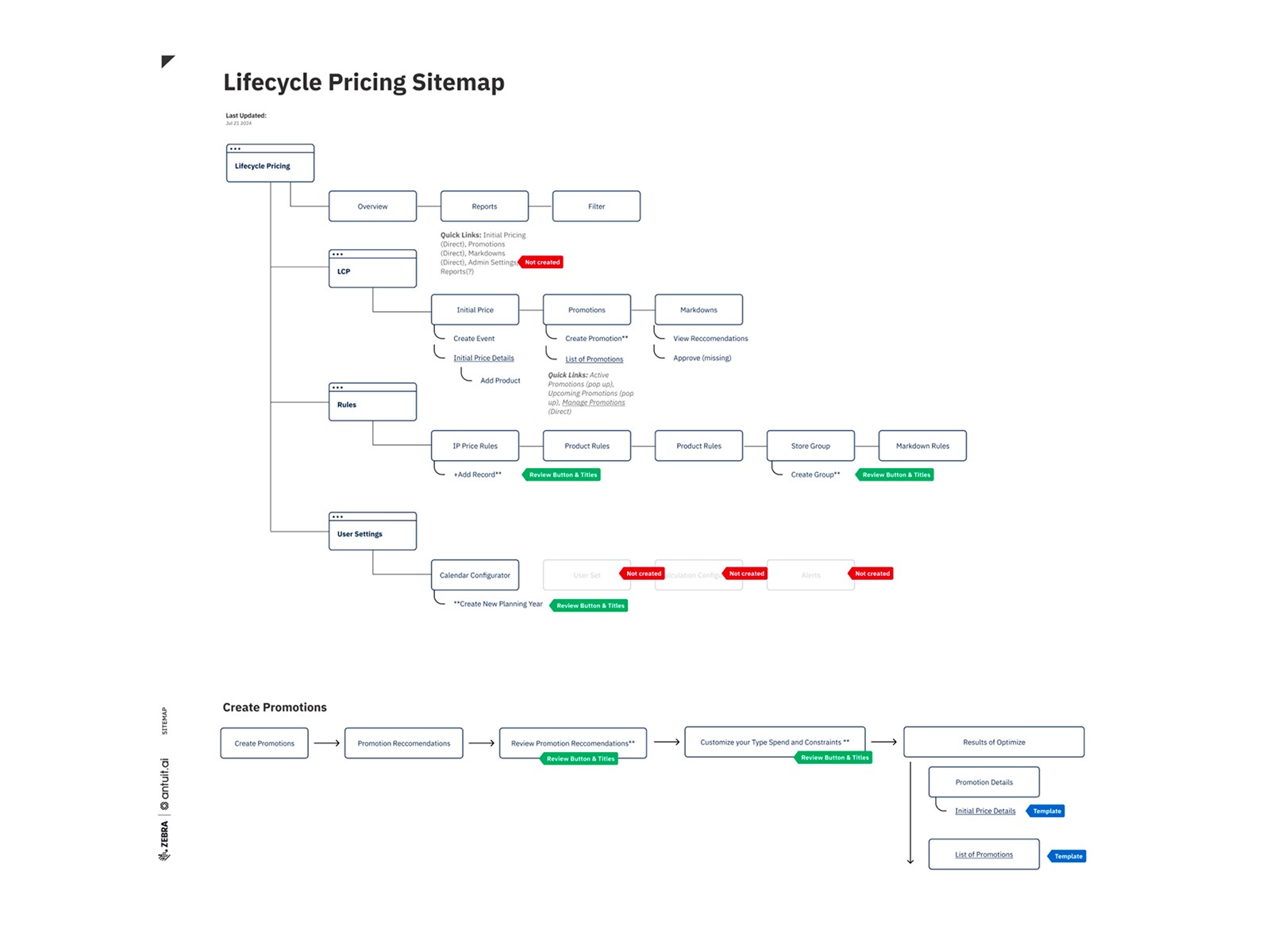
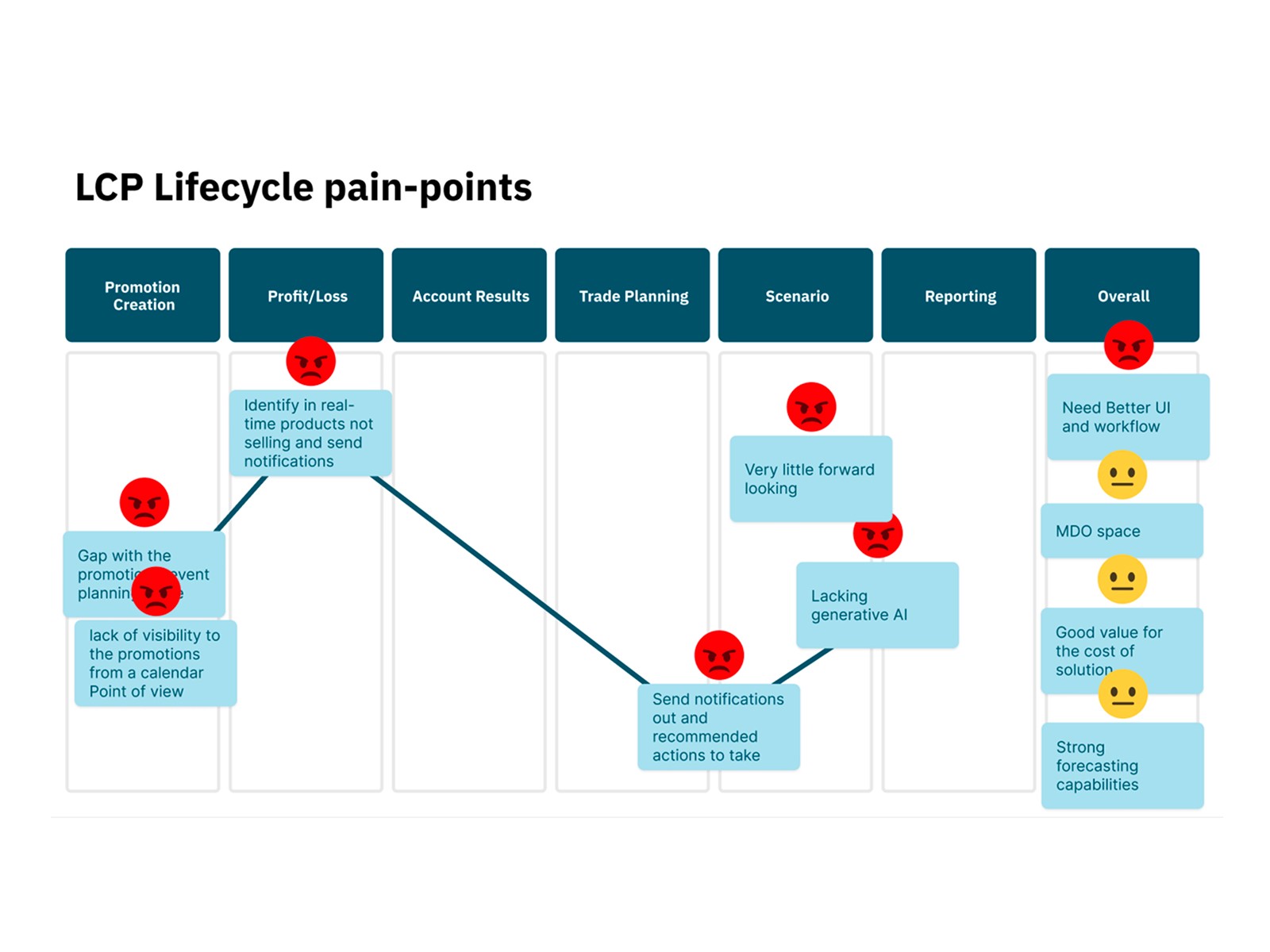
The legacy experience was fragmented. Users bounced between disconnected screens, re-entered data, and lost context mid-workflow. Charts told them what was happening but never what to do next. Merchants weren't short on information; they were drowning in it. Without intervention, LCP would ship as another data-heavy tool nobody trusted.
Strategy
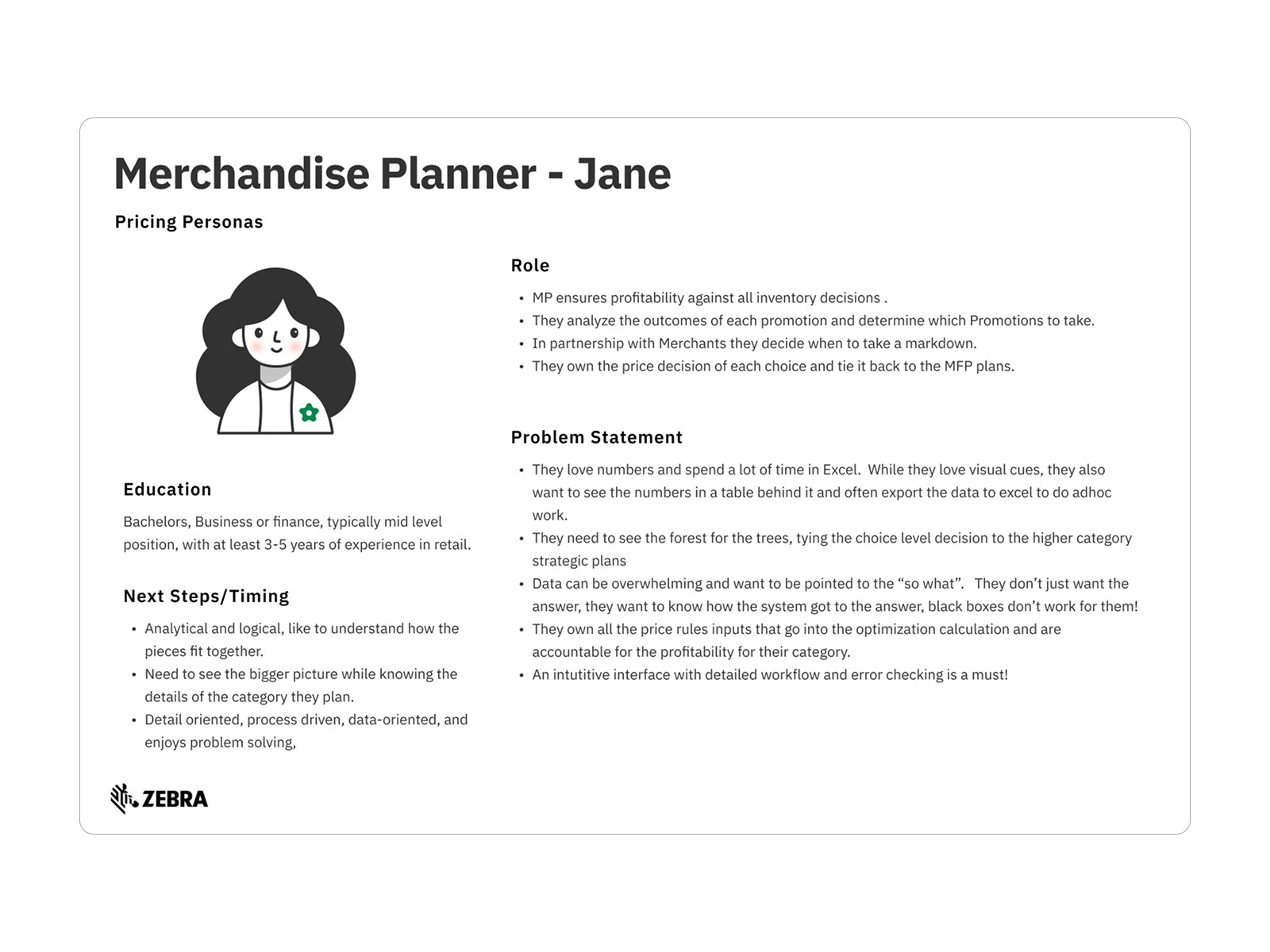
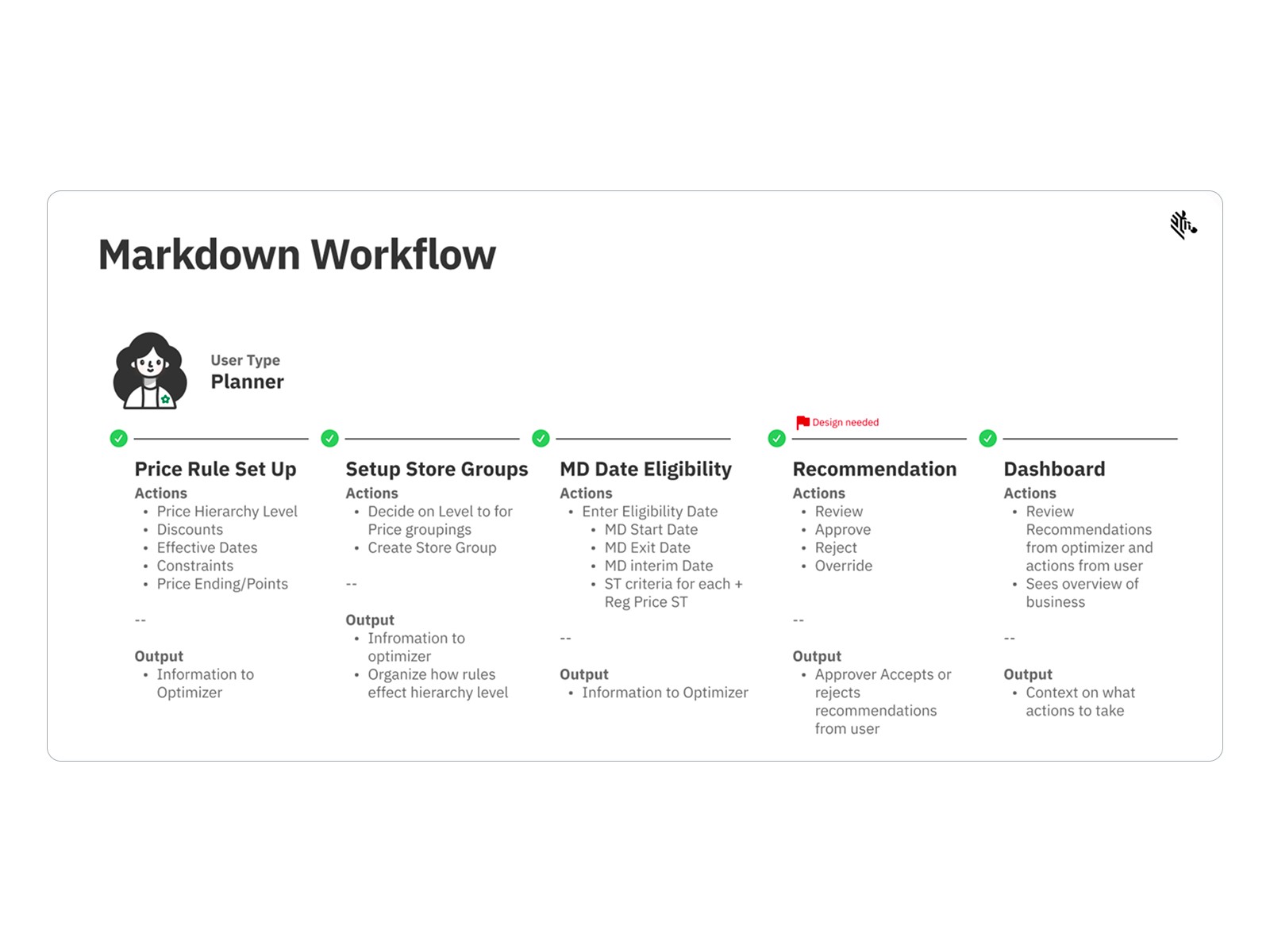
Three pillars: align the system, accelerate the team, simplify the decision. The pivotal bet was repositioning AI as a coach, not a commander. Discovery surfaced one insight, users needed direction, not data, so we narrowed scope to two flows (strategy creation and commitment) and chose NOT to add analytical depth. Weekly stakeholder sessions kept executives aligned on the trade-off.
Process
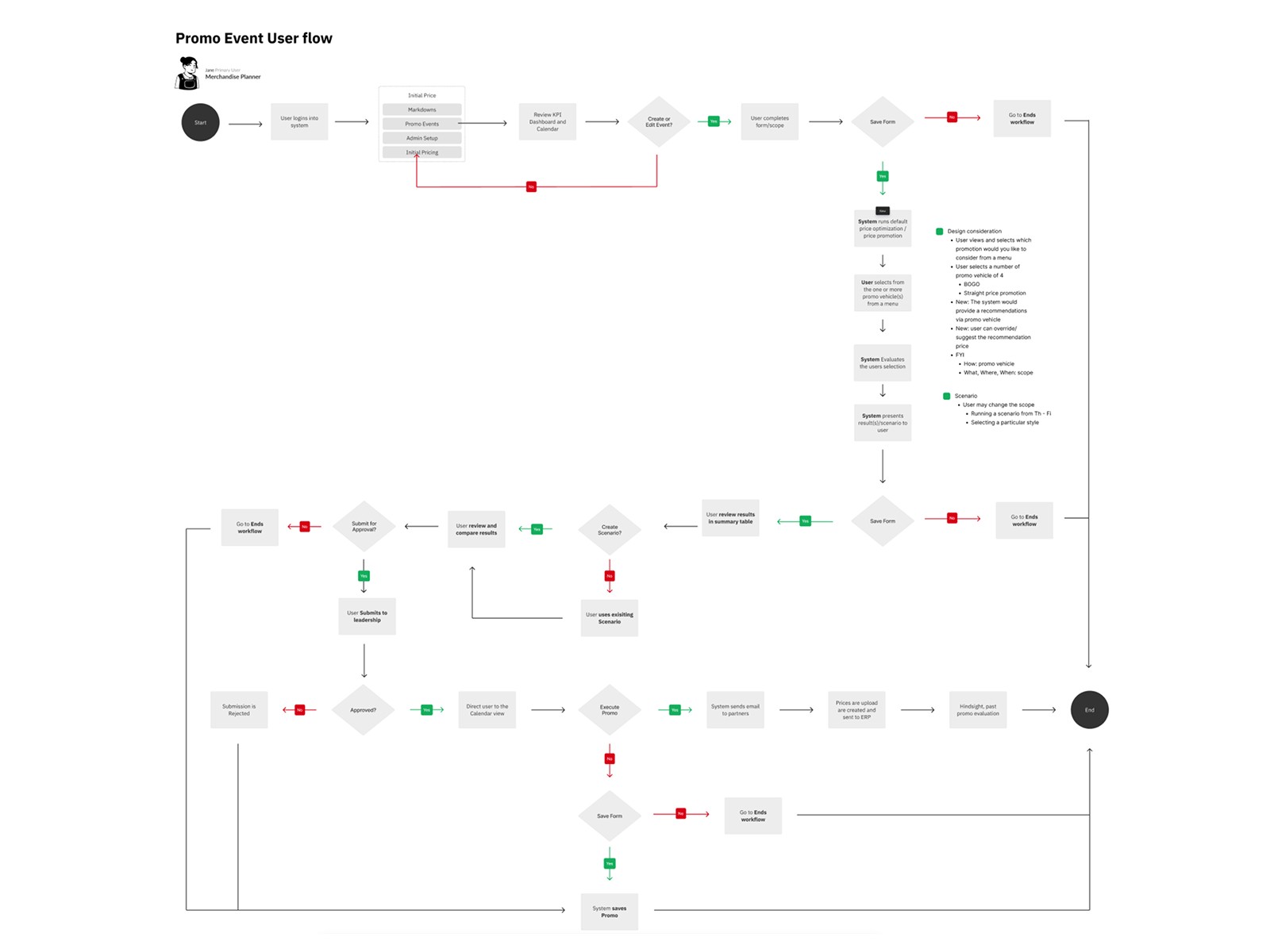
Whiteboard-to-Figma same-day translation kept the PM a sprint ahead of engineering. Daily checkpoints turned stakeholder feedback into same-day iterations, with locked designs logged in Jira for traceability. When capacity risk grew, I brought in a second designer before design became the bottleneck.
Solution
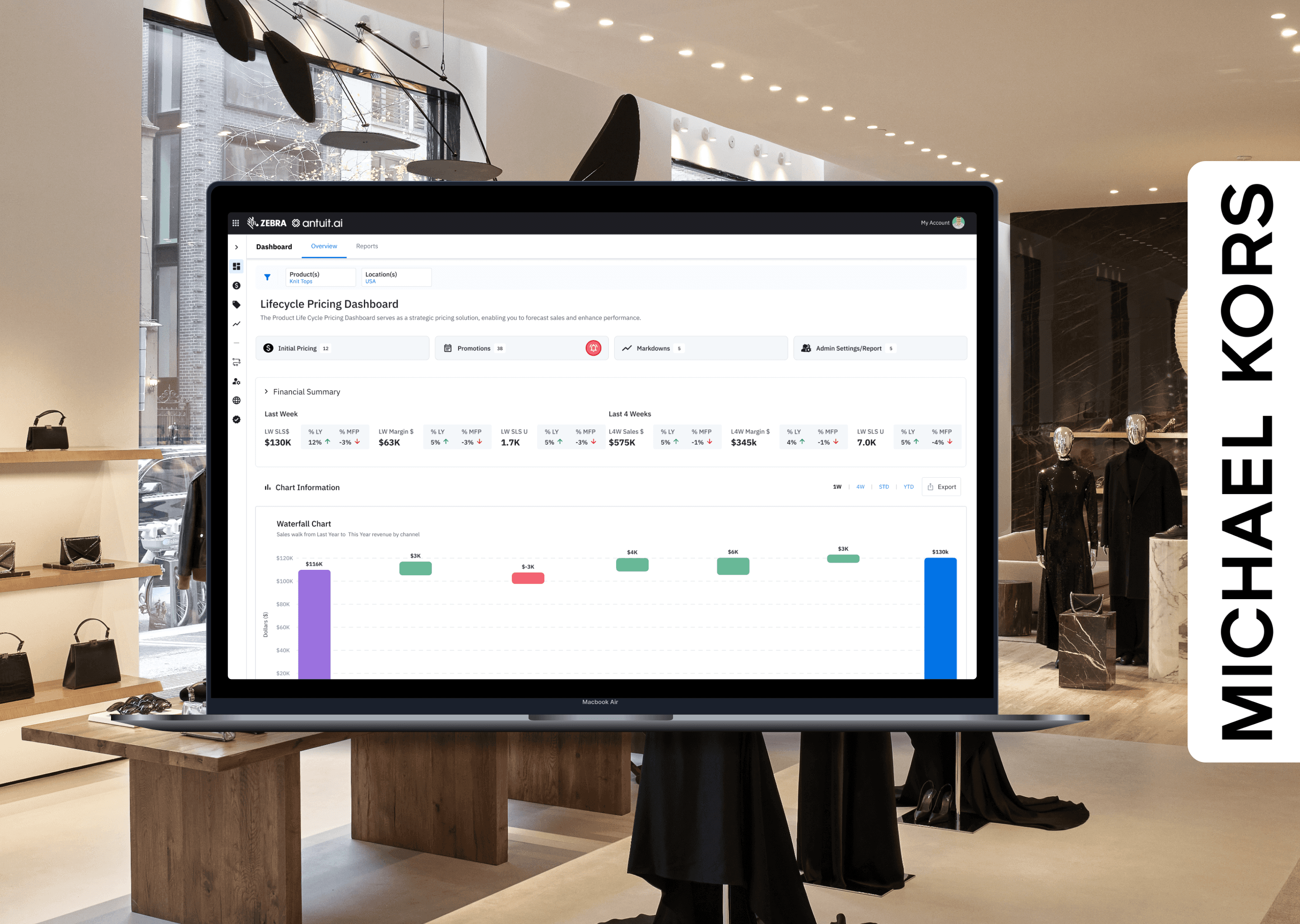
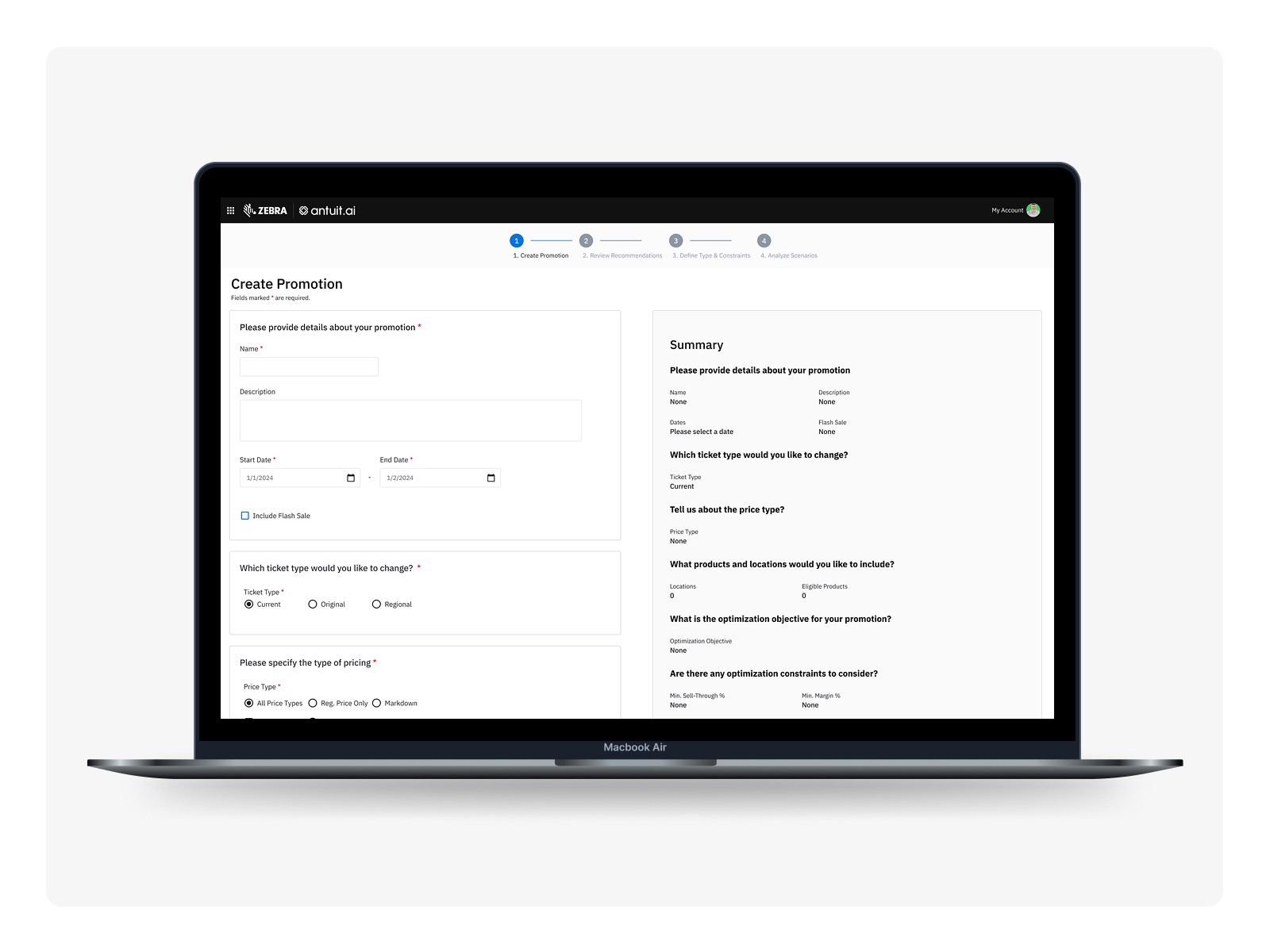
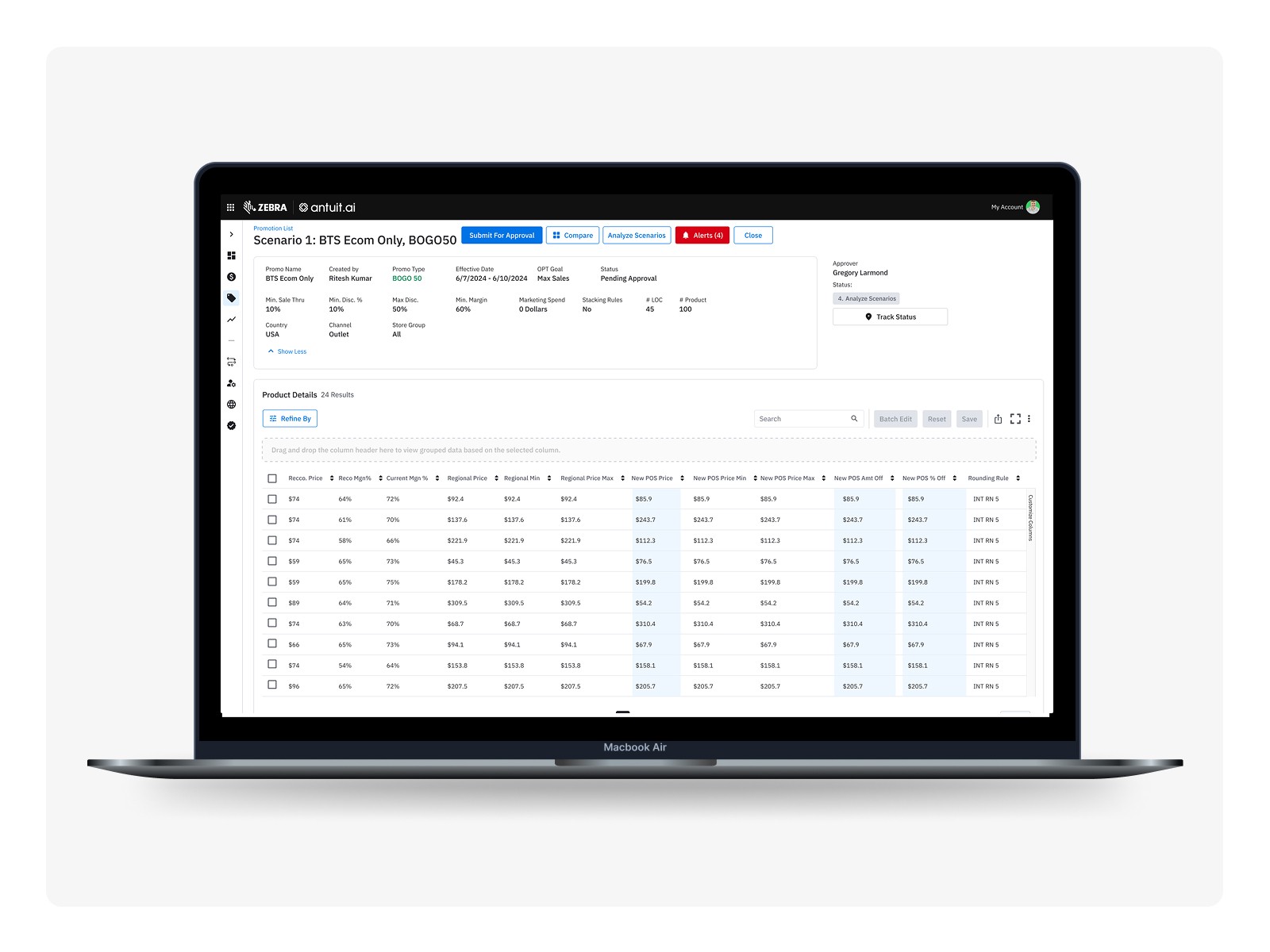
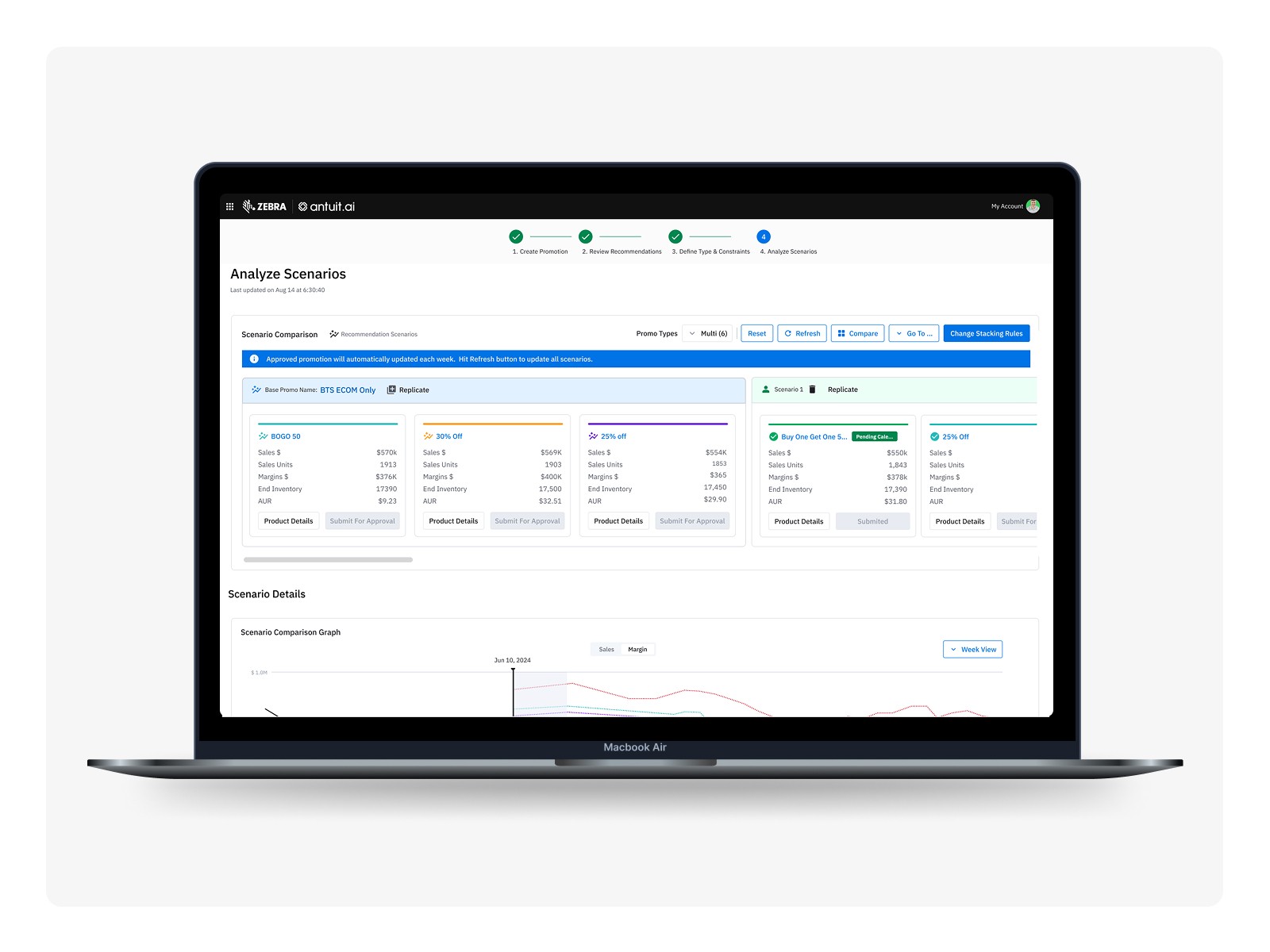
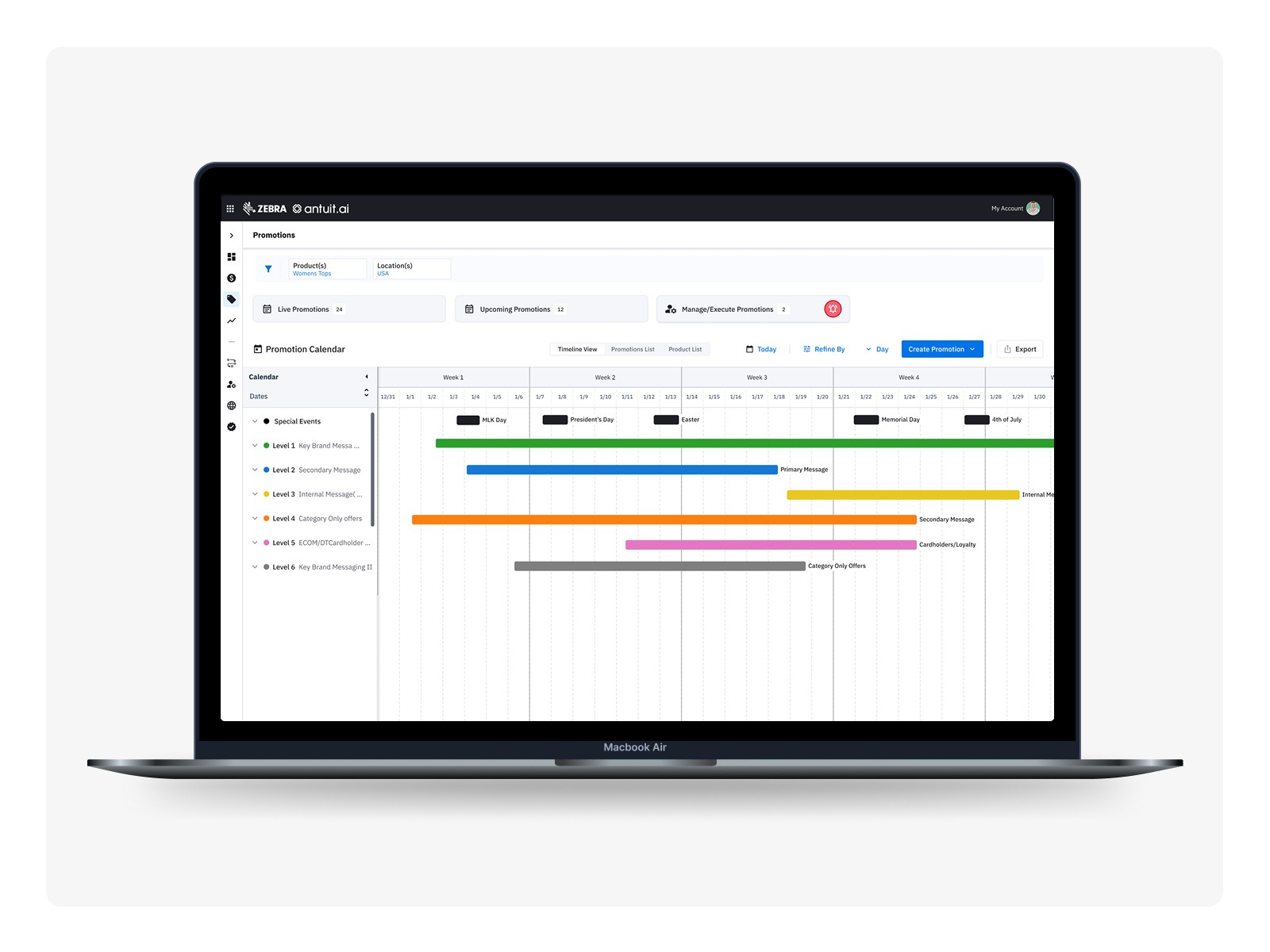
A modular component library replaced one-off patterns. Progressive dashboards led with KPIs and revealed detail on demand. Action-led CTAs like "Accept Recommendation" and "Simulate Outcome" replaced ambiguous next steps. AI simulation tools let merchants tune goals (margin vs. sell-through) and see projected outcomes, turning a black box into a collaborative surface.
Impact
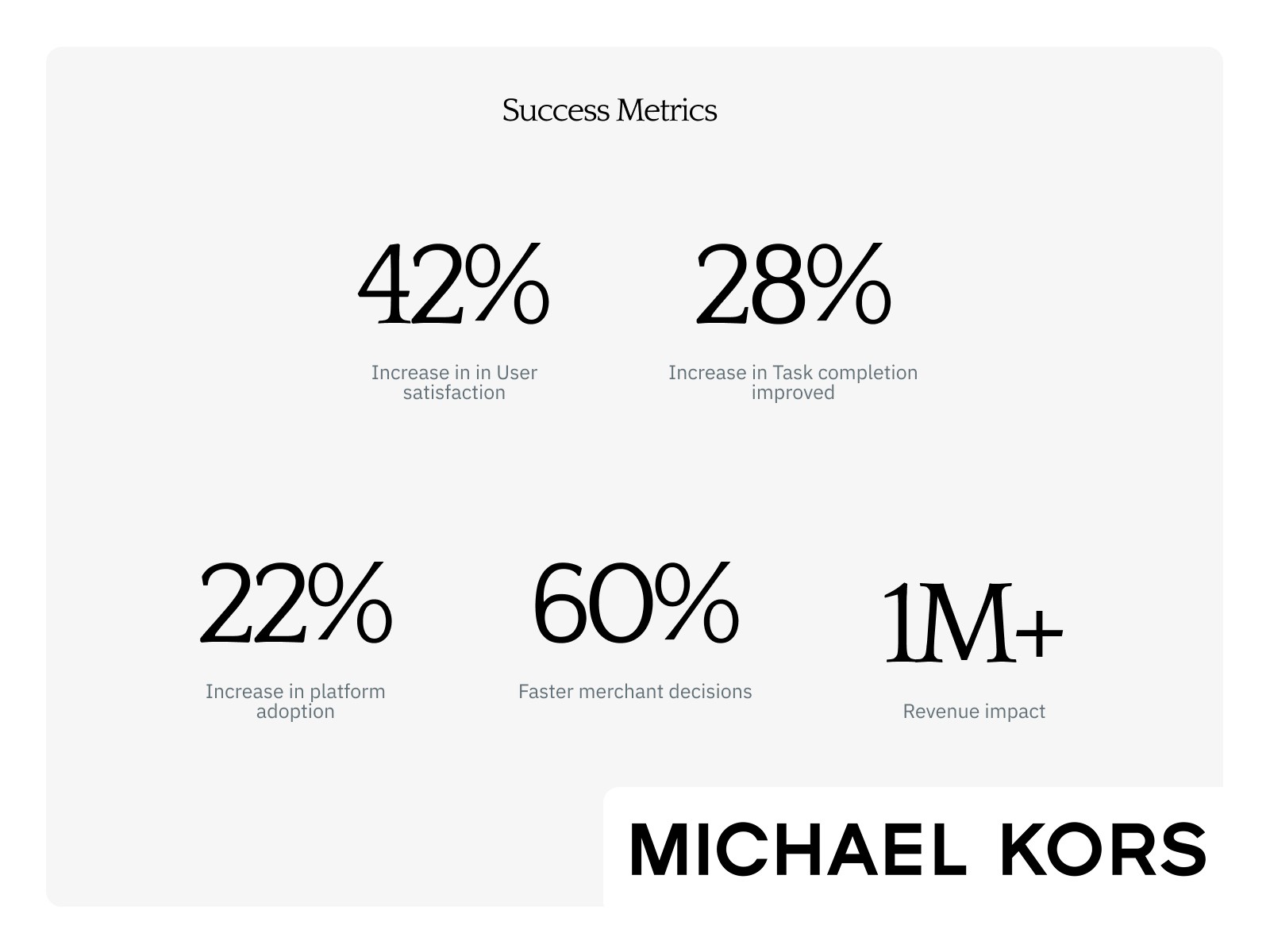
60% faster pricing decisions.
Seven-figure revenue impact.
Two enterprise deals closed, two more advancing.
100% of milestones hit despite the engineering cut.
21.6% adoption lift, 28% task-completion lift
42% user-satisfaction gain.
Component patterns became the baseline for Zebra's other analytics products.
Reflection
The Design Ops ROI
This is where the three pillars converge into a single story about design's value as a business multiplier.
60% faster pricing and markdown decisions, by eliminating unnecessary interpretation and putting AI-guided recommendations at the point of action, merchants moved from analysis to commitment in half the time.
$1M+ in direct revenue impact, the shipped capabilities weren't just functional, they were sellable. Design quality became a differentiator in the sales cycle.
2 enterprise deals closed, 2 more advancing in the pipeline, the LCP module proved valuable enough to expand Zebra's retail portfolio and open new client conversations.
100% of production milestones met with 50% engineering capacity, by aligning earlier, validating sooner, and eliminating rework through fail-fast cycles, design absorbed the operational gap without slipping a single deadline.
Reusable UI foundation adopted across Zebra's analytics products, the component patterns and design system contributions from this project didn't stay siloed. They became the baseline for how Zebra builds data-rich interfaces.
Improved AI adoption through transparent, user-controlled simulations, the most important shift wasn't technical, it was perceptual. AI stopped feeling like a replacement for merchant judgment. It started feeling like an amplification of it.
Reflection
This project crystallized something I've been building toward across my career: great design isn't just about usability, it's about operational leverage.
Speed isn't about working longer or faster. It's about aligning earlier, validating sooner, and tying every design decision to a business goal so tightly that the value is self-evident. When I look at the LCP outcome, the revenue and the deals and the adoption numbers are real, but the deeper win is the framework underneath them.
By combining human-centered insight (understanding that merchants needed direction, not data), AI-first thinking (repositioning AI as a decision partner rather than a black box), and design system rigor (building once, scaling everywhere), we delivered outsized impact under real-world constraints. That's the Design Ops ROI story: when you unite human empathy with system scale, design stops being a cost center and starts being a growth engine.