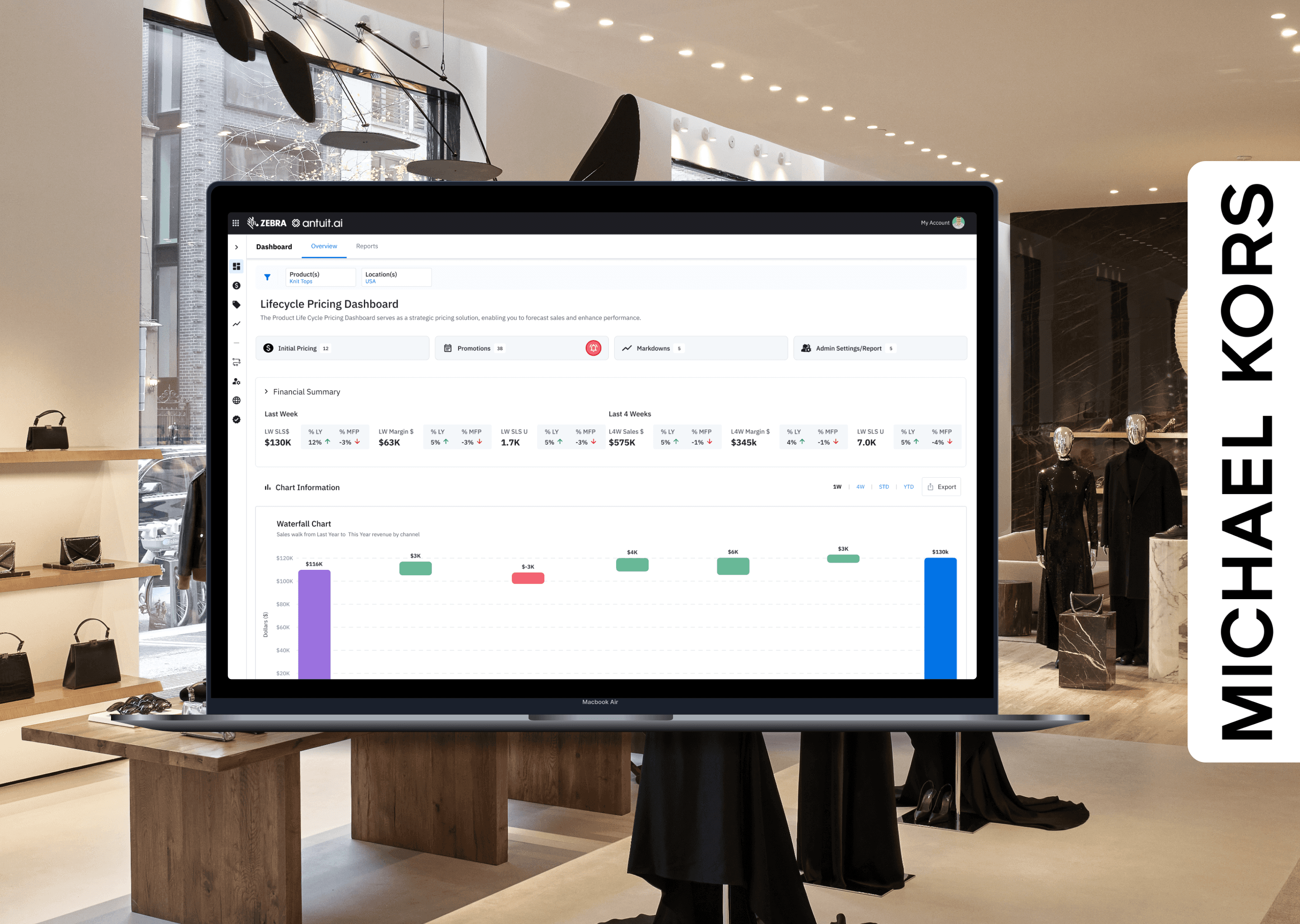
Redesigning Frontline Work: AI-Driven Mobile for Amazon & Lowe's
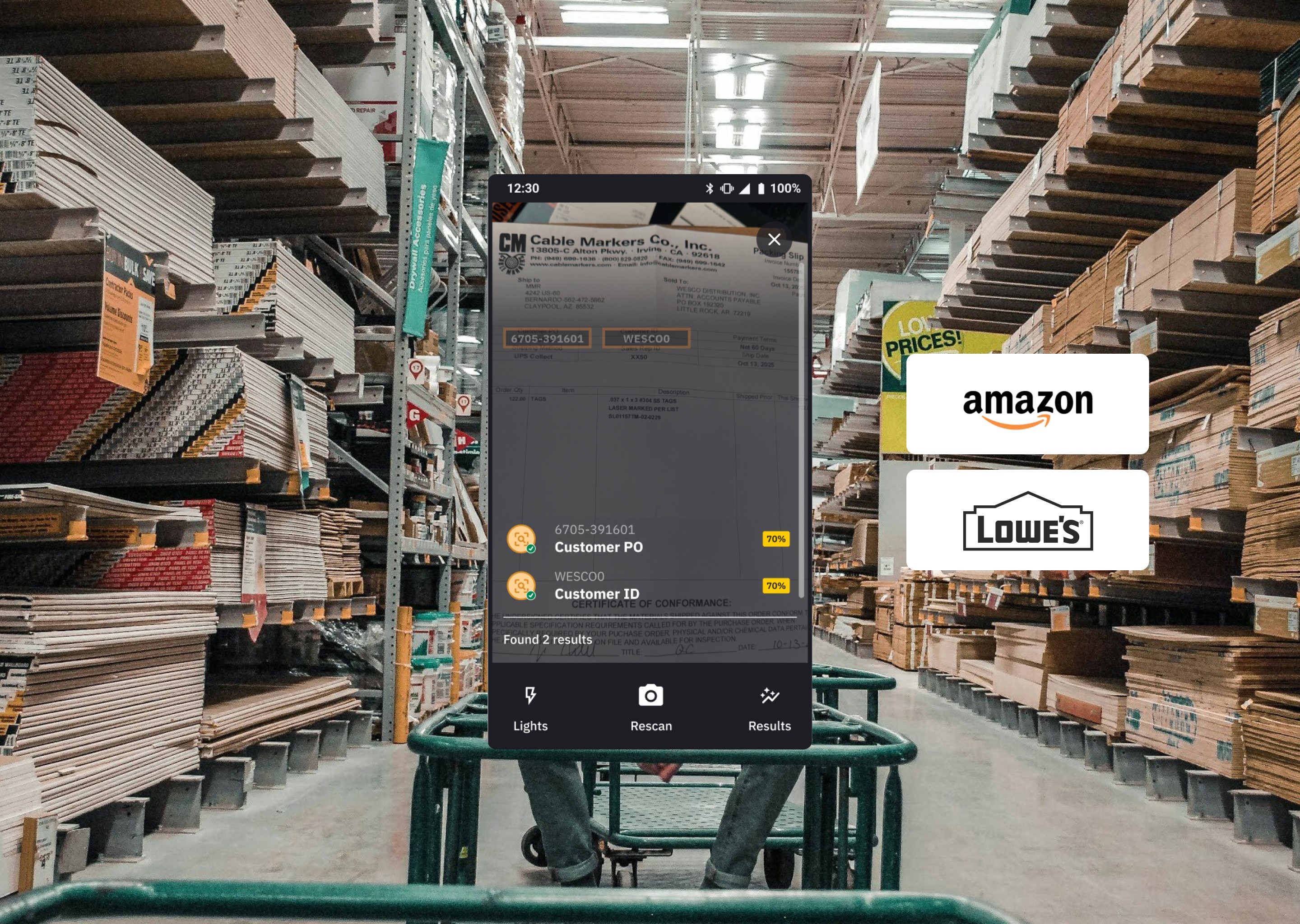
Warehouse receivers spent their day stitching together supplier, item, and invoice data across disconnected screens to validate a single PO. I led end-to-end UX for Zebra's EMC (Enterprise Mobile Computing) division, a unified, context-aware experience built for gloved hands and devices from 4-inch handhelds to 8-inch tablets.
Client
Type
Year
Approach
Context
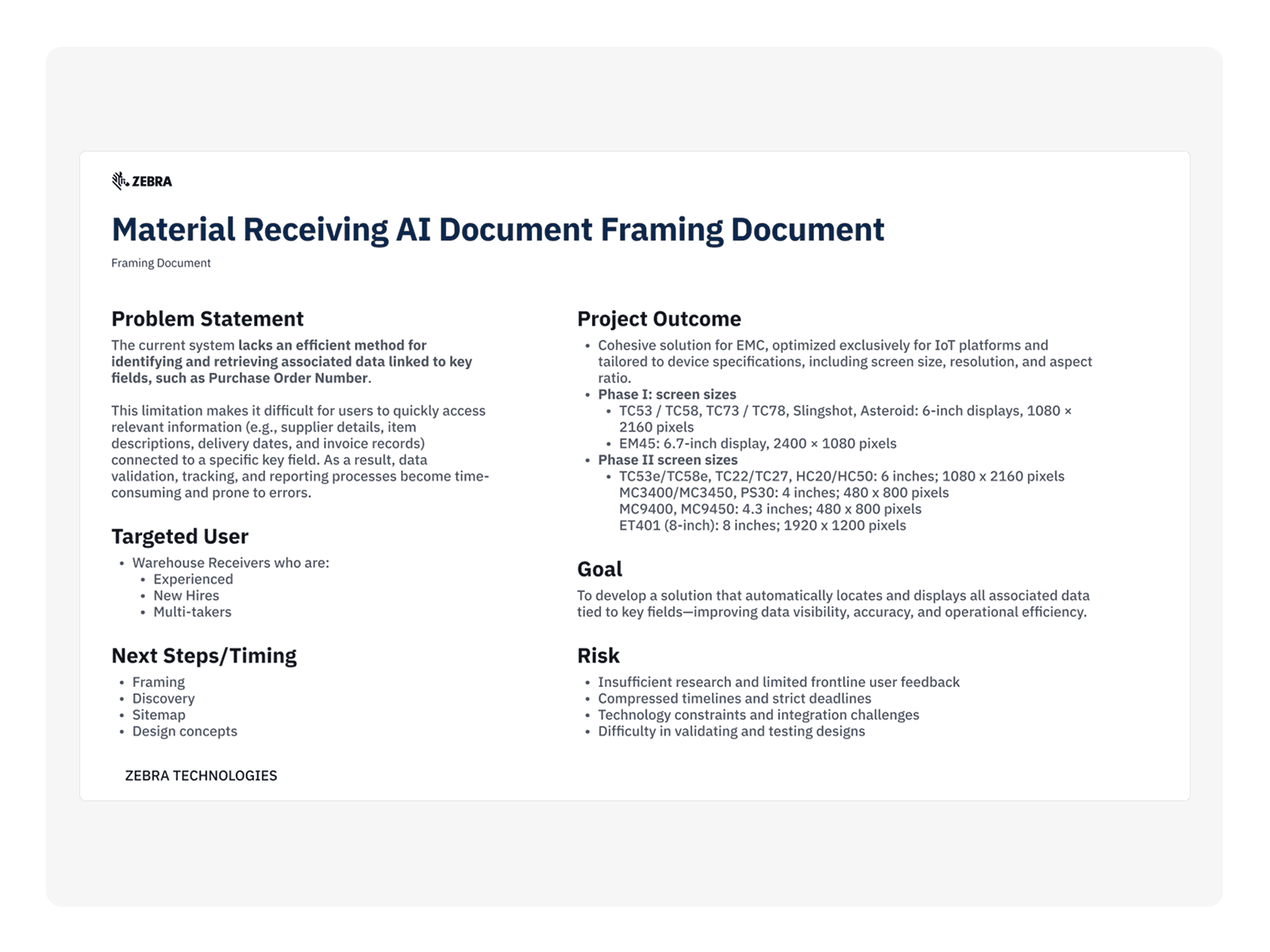
Zebra's mobile computers has captured a large marketshare supporting receiving workflows for global warehouses, gating inventory accuracy, supplier payments, and fulfillment. As Senior UX Designer, I owned end-to-end solution across every device class, partnering with product, engineering, and hardware teams. Constraints included limited frontline research access, fixed deadlines, legacy integrations, and 8 devices ranging from 480×800 to 2400×1080 screen size resolutions.
The Problem
Receivers couldn't pull up everything tied to a key field without hopping between systems. Validation was slow, errors compounded, and the experience varied by device. Prior attempts treated each screen size as its own design problem, this fragmenting the mental model, costing departments throughput on the floor.
Approach
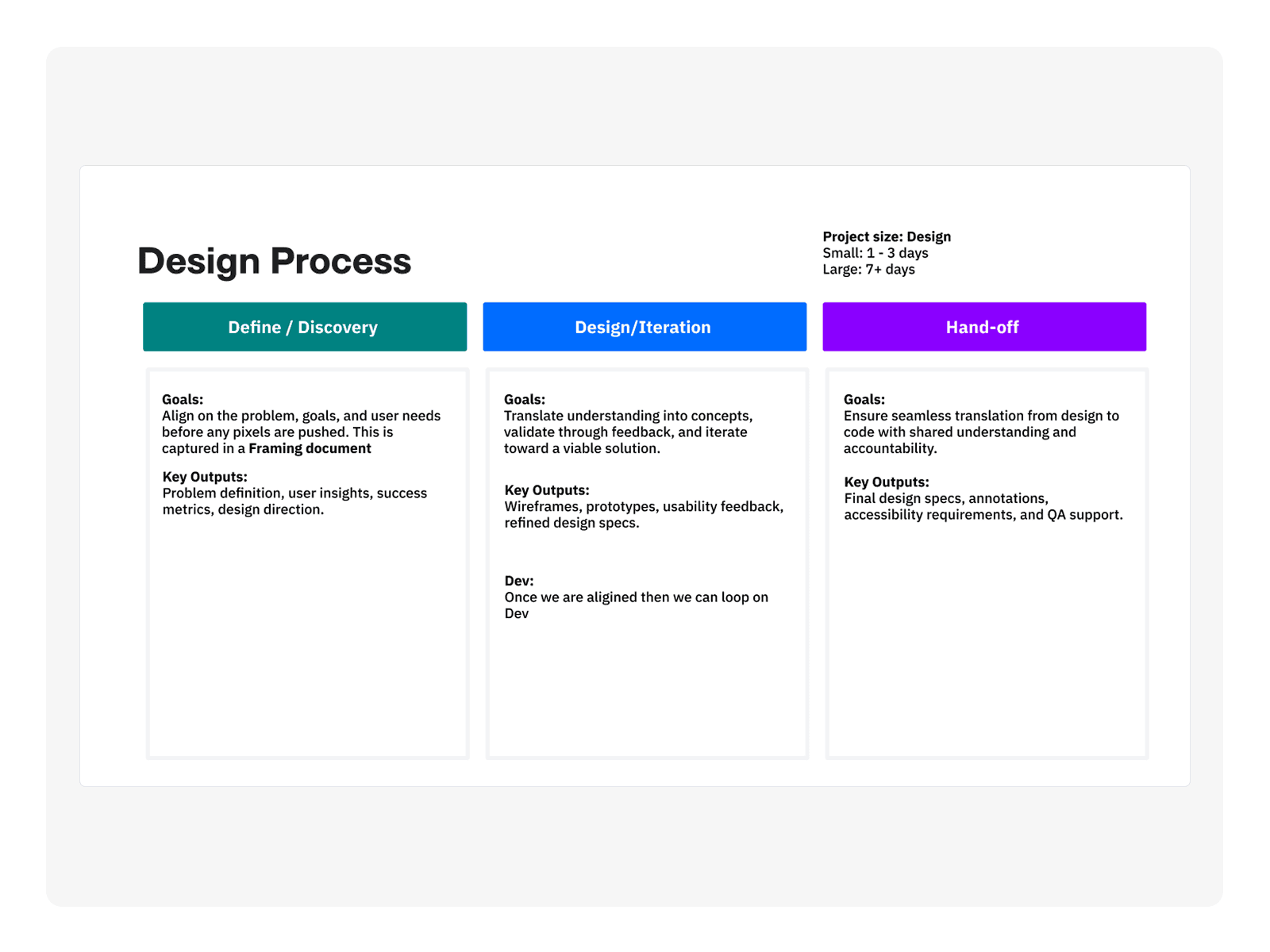
Success meant one mental model across all hardware. I designed device-class first, anchoring each layout to a reference resolution and validating across the fleet. I started from the 4-inch handhelds set - the hardest density constraints, and scaled up. The bet: if the smallest screen worked for gloved, interrupted, low-light use, the rest would follow. A shared spec and weekly check-ins aligned execs, PMs, and engineering.
Process
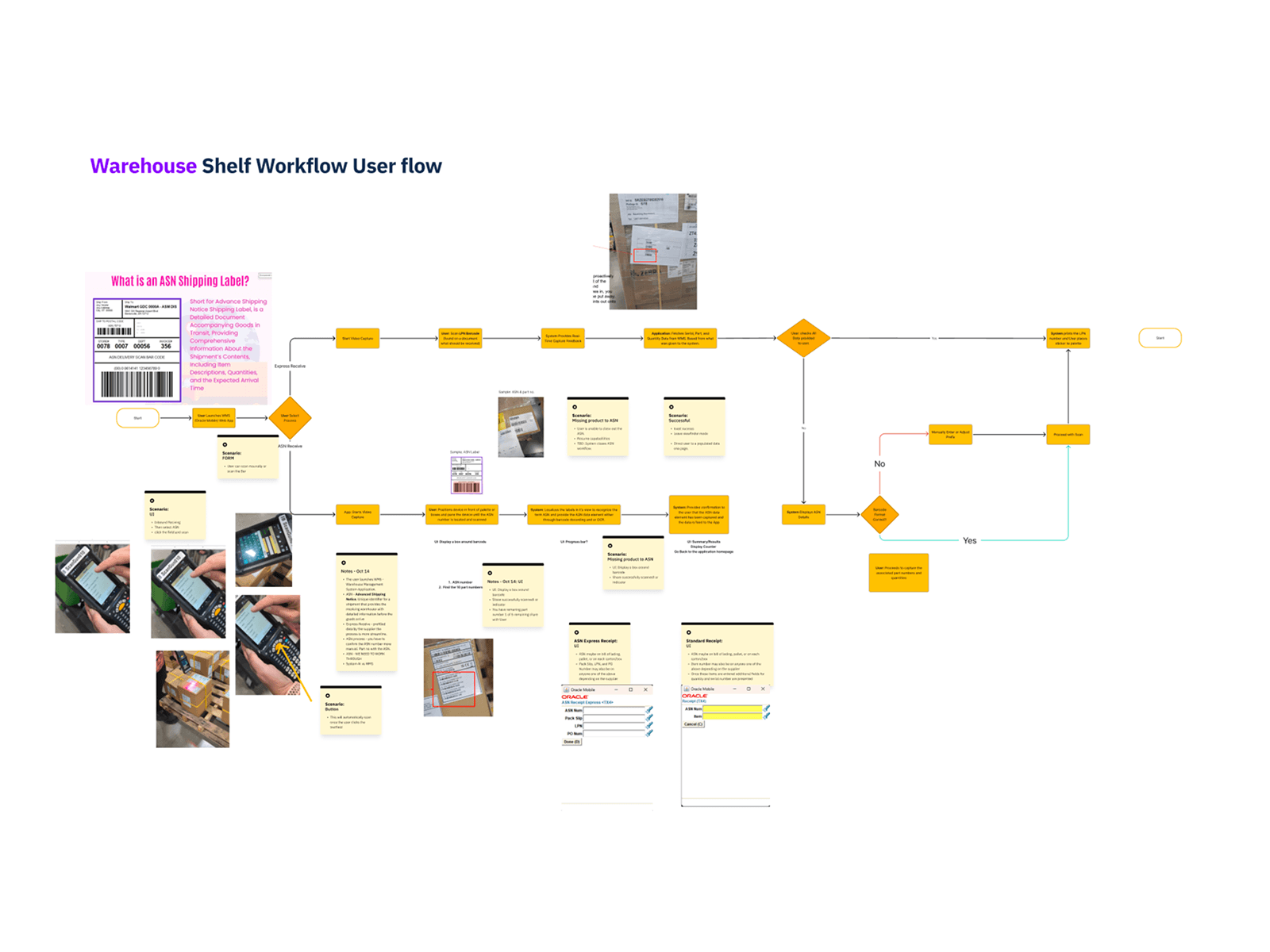
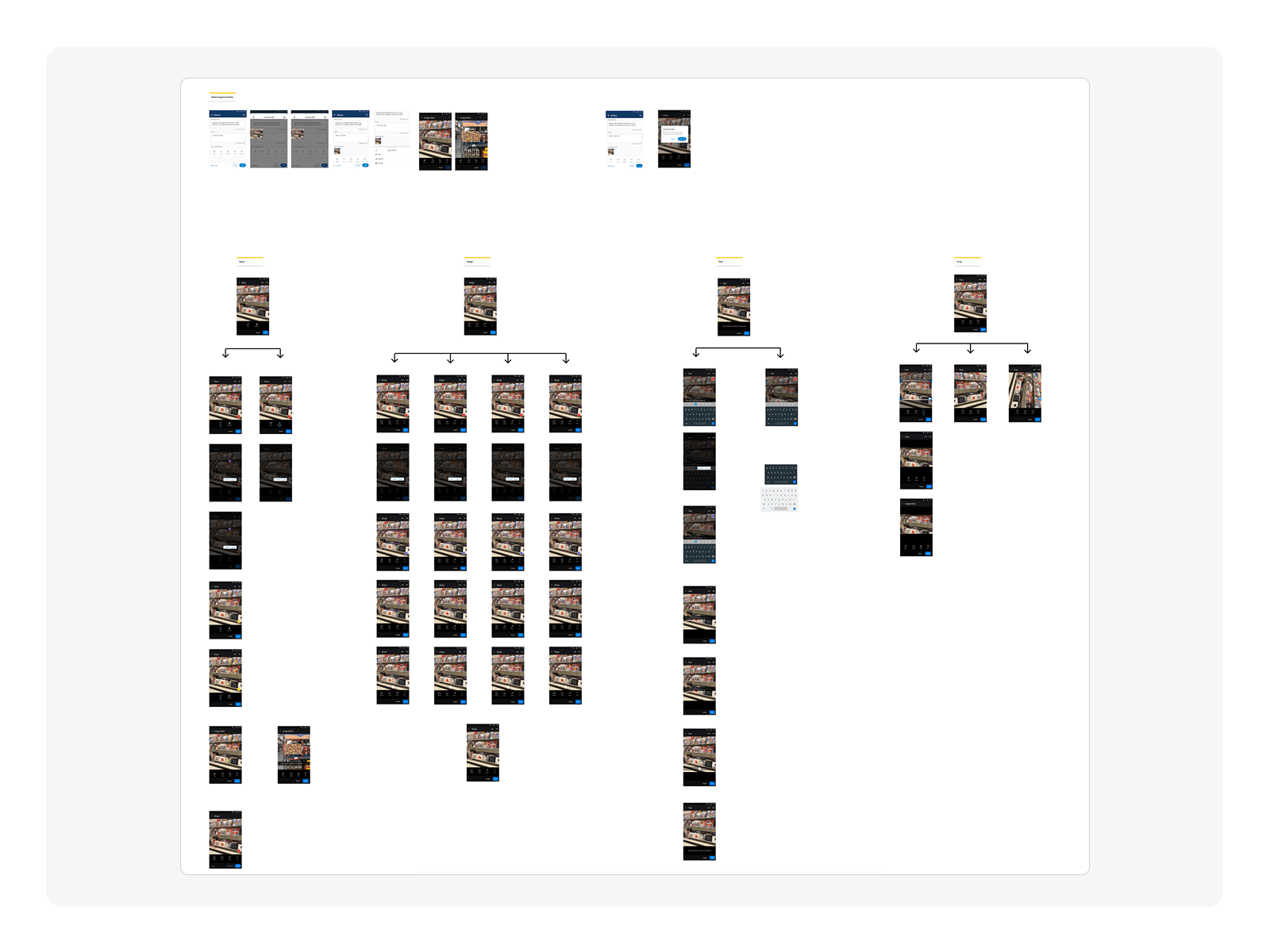
A workflow audit mapped every manual correlation receivers were forced to make. I built three archetypes, tenured, new hire, multi-tasker, and pressure-tested every decision against them. Early concepts that surfaced all linked records at once were killed; they overwhelmed handhelds. v1 collapsed too much, v2 over-paginated, v3 landed on context-aware grouping that scaled per device. Scenario reviews stress-tested interrupted sessions, partial scans, and mismatched POs.
Solution
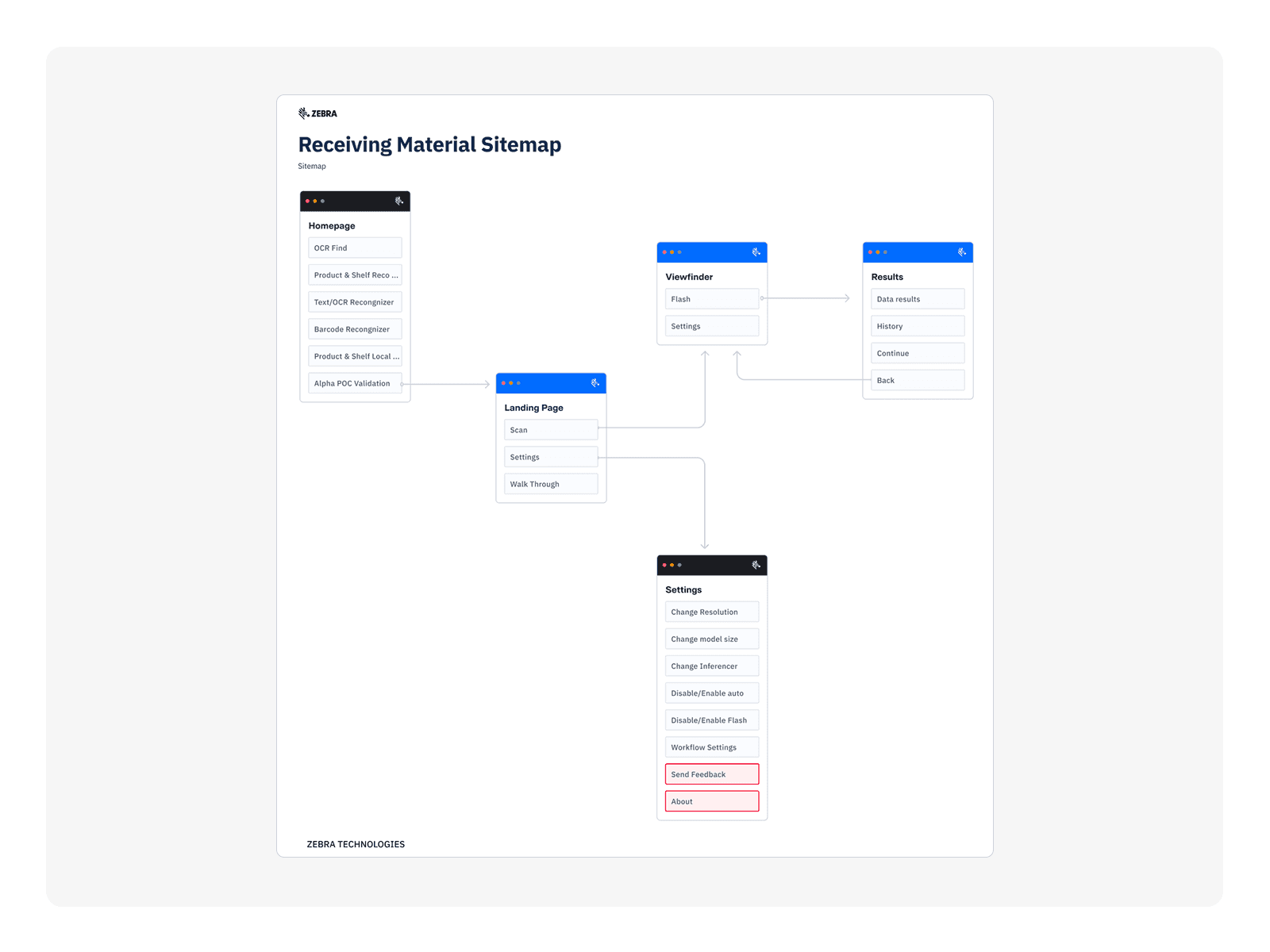
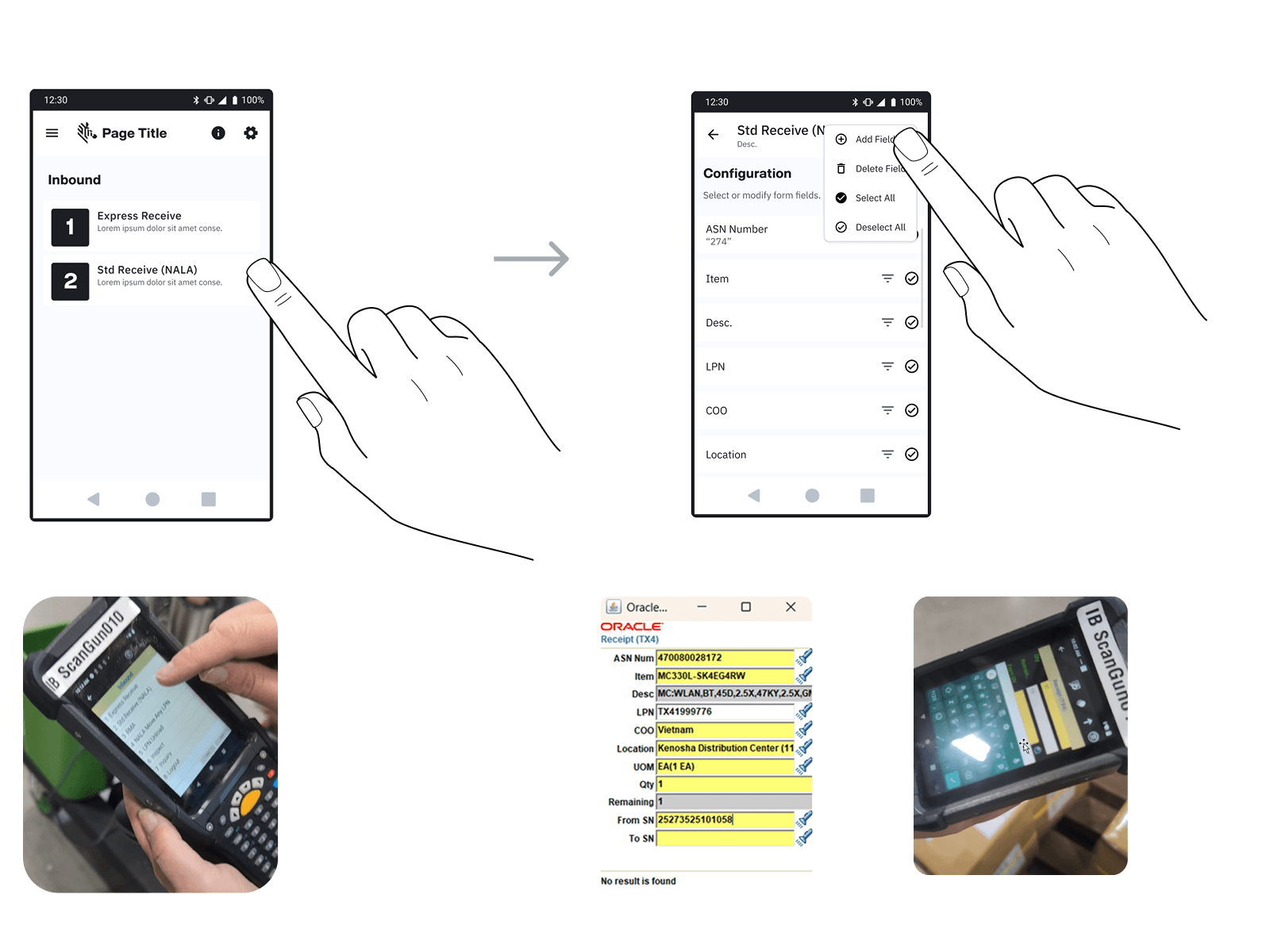
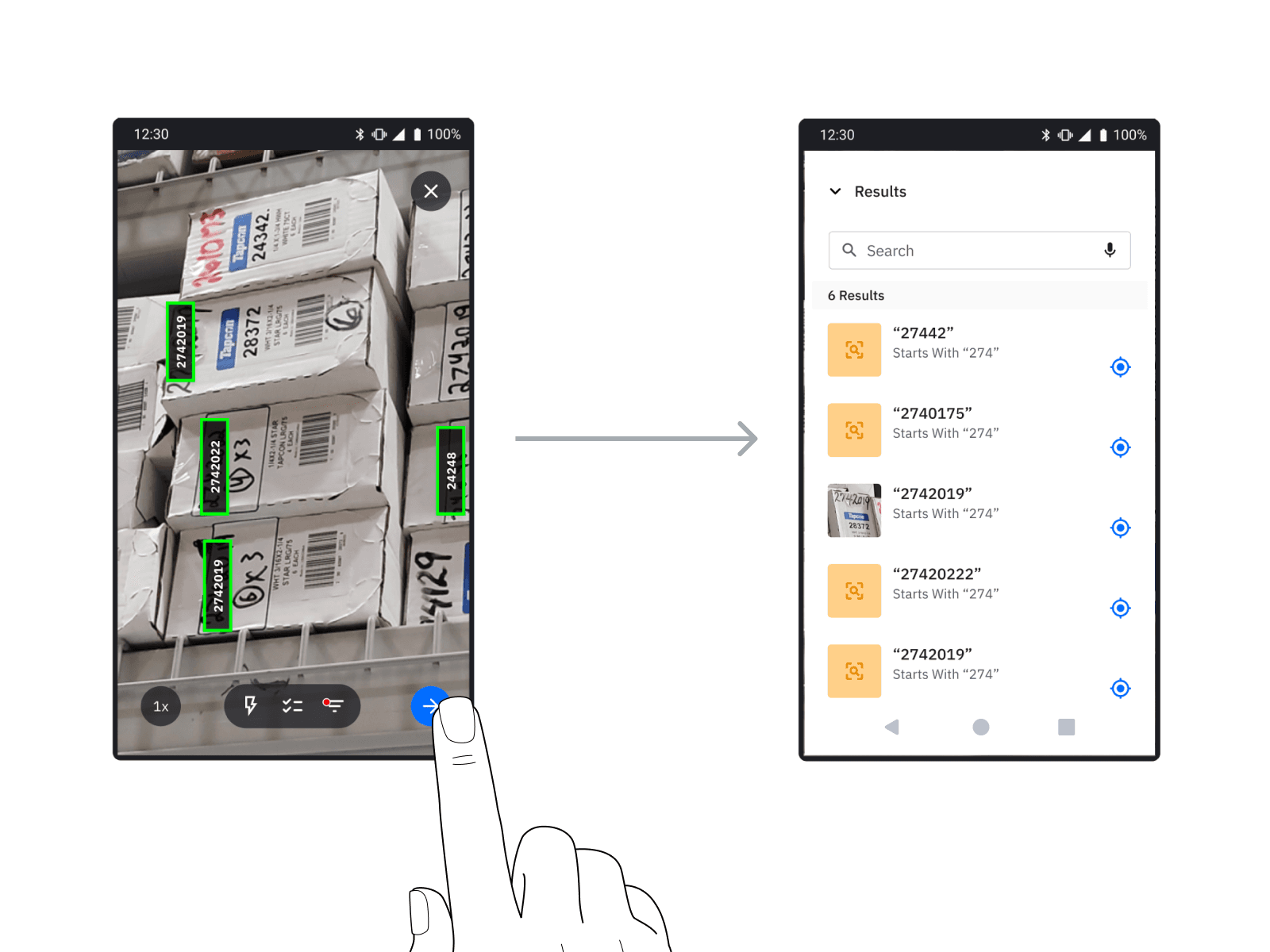
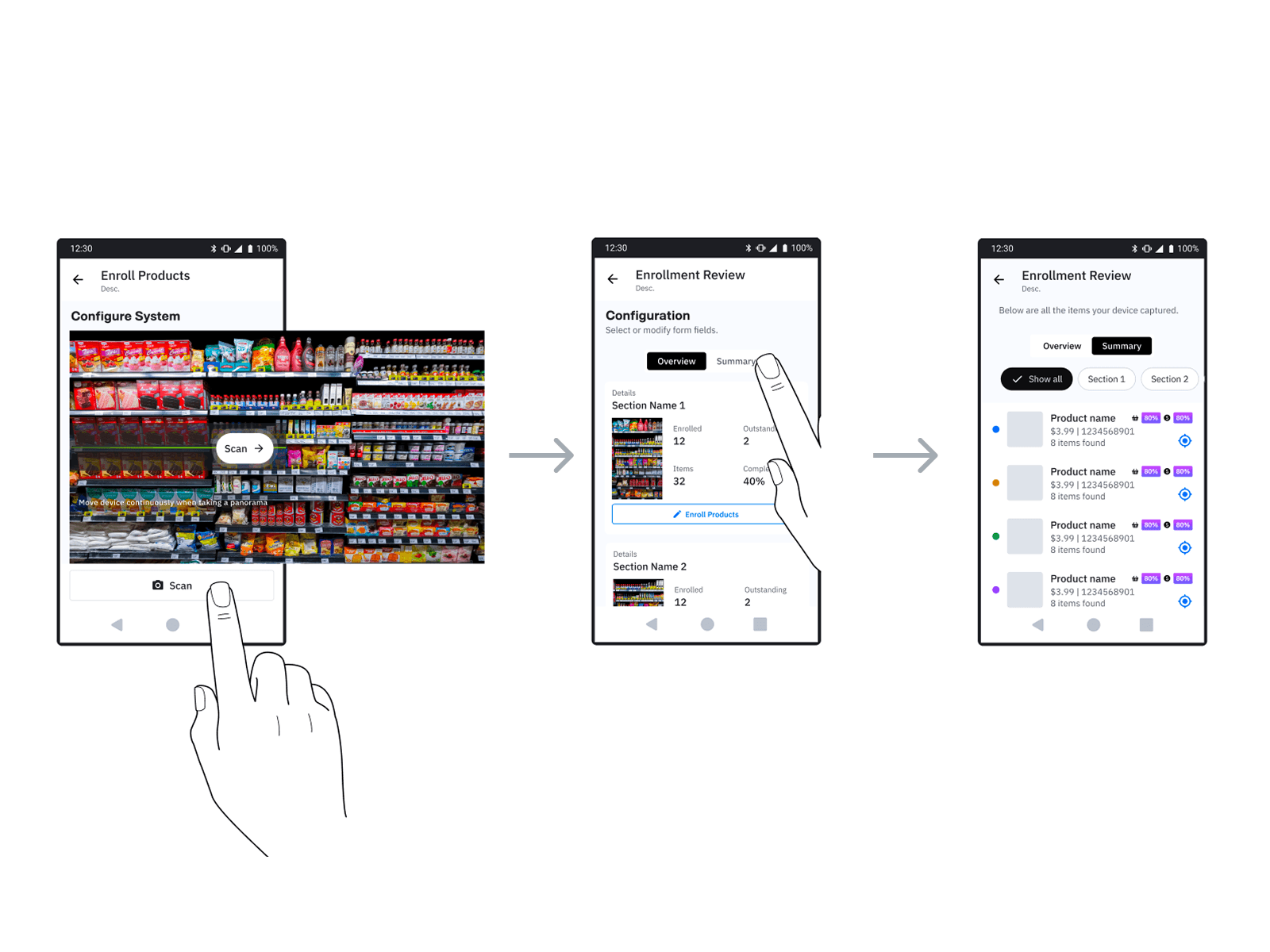
We were able to create a suite that connected record, supplier, item, delivery, invoice, into one streamlined experience. The design system driving component behavior was now consolidated into one spec so engineering shipped once across the fleet.
Reflection
Impact
Phase I launched across the TC53/TC58, TC73/TC78, Slingshot, and Asteroid platforms, establishing a consistent experience across three Zebra devices and additional form factors. In Phase II, the system scaled to support seven more device types. Receivers benefited from a unified mental model regardless of hardware, while engineering reduced implementation overhead through a single shared specification. Product managers also leveraged the shared system to accelerate delivery timelines and meet shipping schedules.
Reflection
Designing for the constraint, not the flagship, was the right call. The 4-inch handheld forced clarity that benefited every larger screen. In fleet-wide enterprise design, parity is a feature, and one mental model is worth more than per-device polish.